Few rivalries in English football match the intensity of the Tyne–Wear derby between Newcastle United and Sunderland A.F.C.. Separated by just 12 miles in northeast England, the two clubs have contested one of the most heated derbies in the sport for well over a century.
From chaotic early matches and record-breaking scorelines to unforgettable modern encounters, the Tyne–Wear derby has consistently produced drama both on and off the pitch. With generations of supporters deeply invested in the rivalry, every meeting carries immense significance for both clubs and their cities.
Below is a look at the history of the Tyne–Wear derby, key statistics, memorable matches, and the moments that have shaped one of football’s fiercest rivalries.
For another look at one of English football’s most historic rivalries, read our complete history of the Merseyside Derby between Liverpool and Everton — a fixture with roots just as deep.
What is the Tyne-Wear Derby?
The Tyne–Wear Derby is one of English football’s fiercest rivalries, contested between Newcastle United and Sunderland. The fixture takes its name from the rivers that run through each city – the River Tyne in Newcastle and the River Wear in Sunderland – and represents far more than just a football match. Rooted in deep regional identity and historical tensions between the two cities in the North East of England, the derby is defined by intense passion, vocal atmospheres, and unwavering loyalty from both sets of supporters.
First played in 1883, the Tyne–Wear Derby has grown into one of the most anticipated fixtures in English football whenever the two clubs meet. Matches are often highly charged, with form and league position frequently taking a backseat to pride and bragging rights. Whether at St James’ Park or Stadium of Light, the occasion is marked by electric atmospheres, fierce tackles, and memorable moments that have helped cement the derby’s reputation as one of the game’s most iconic rivalries.
Newcastle United vs AFC Sunderland Head-to-Head Statistics
Matchup statistics
Newcastle vs Sunderland Head-to-Head Record:
Newcastle: 54 wins
Sunderland: 55 wins
Draws: 50
Head-to-Head Record – Top-Flight Matches:
Newcastle: 51 wins
Sunderland: 48 wins
Draws: 44
League Doubles Won over Opponent:
Newcastle: 9 (most recent: 2005–06)
Sunderland: 9 (most recent: 2025–26)
Goals scored:
Newcastle: 227
Sunderland: 233
Newcastle vs Sunderland Largest Margins of Victory:
Newcastle: 6–1 (December 1920, December 1925)
Sunderland: 9–1 (December 1908)
Longest Win Streak:
Newcastle: 5 games (2002–2006)
Sunderland: 6 games (2013–2015)
Most Consecutive Draws: 4 (1985–1990)
Origins of the Tyne–Wear Rivalry
The rivalry between the people of Newcastle and Sunderland dates back nearly 500 years to conflicts during the English Civil War. In football, however, the rivalry began to take shape in the late 19th century.
Both cities experienced internal football rivalries before turning their attention toward one another. In Newcastle, the city’s football scene was divided between east-end and west-end clubs. By 1892, Newcastle West End had collapsed, leading Newcastle East End to rebrand as Newcastle United.
Sunderland, meanwhile, were already an established club but faced pressure from a breakaway side formed by a group of players known as Sunderland Albion. Like many breakaway clubs of the era, Sunderland Albion did not last.
With their respective local rivals gone, Newcastle and Sunderland soon turned their focus toward each other, creating the foundation for the Tyne–Wear derby.
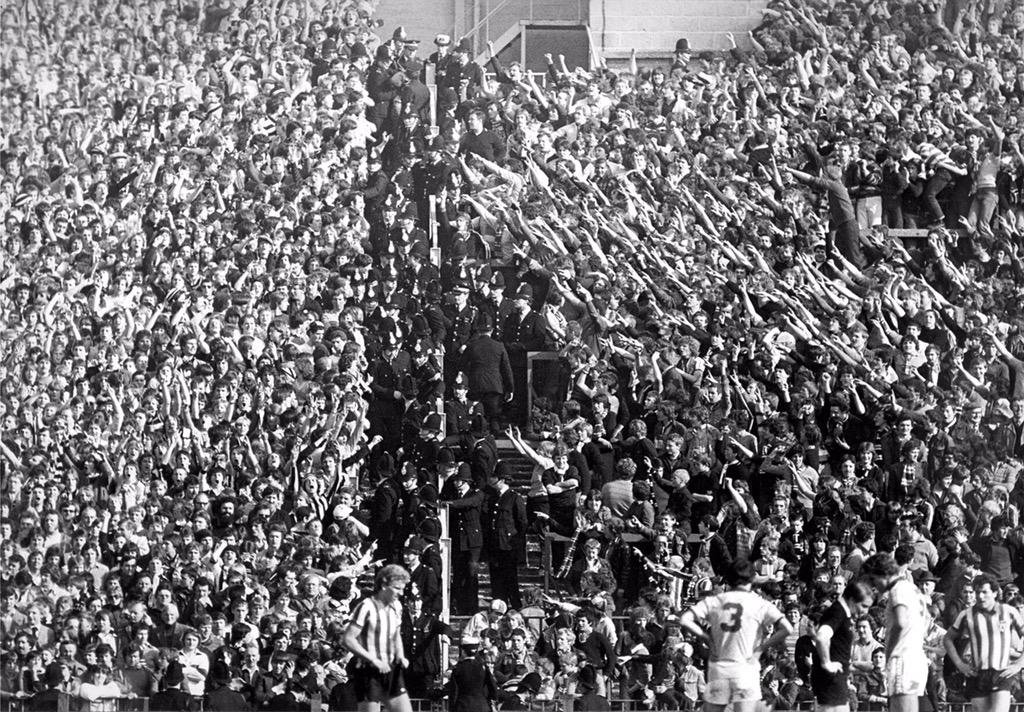
By the turn of the 20th century, the rivalry was already making headlines. In 1901, a match at St James’ Park was abandoned when an estimated 70,000 fans – more than twice the stadium’s capacity – descended upon the ground. Some reports even suggested that as many as 120,000 spectators were present.
Fans broke down gates and scaled the walls of the main stand as officials struggled to control the situation. When it became clear the pitch could not be cleared for play, chaos erupted. The incident became known as the “Good Friday Riot,” as supporters from both clubs clashed violently. Nets and flags were torn down, while uprooted barriers were used as weapons. Police officers needed two hours to restore order.
Miraculously, only 12 injuries were reported, including one man who fell from the roof of the main stand. The event cemented the intensity of the rivalry and made clear that supporters from both sides would not easily coexist.
Seven years later, Newcastle entered a December 1908 meeting as reigning English champions. Sunderland, however, delivered one of the most shocking results in derby history, defeating their rivals 9–1 at St James’ Park. The result remains the largest margin of victory in Tyne–Wear derby history more than a century later.
Memorable Tyne–Wear Derby Matches
In addition to Sunderland’s historic 9–1 victory and the infamous Good Friday Riot, the derby has produced many unforgettable encounters.
In 1990, Newcastle and Sunderland met in the Second Division promotion playoff semifinals, in what some consider the biggest Tyne–Wear derby ever played. After a scoreless first leg at Roker Park, Sunderland travelled to St James’ Park and secured a dramatic 2–0 victory.
Late in the match, with Newcastle trailing by two goals, hundreds of home supporters stormed the pitch in an attempt to have the game abandoned. Players were temporarily removed while order was restored before the match was completed. The incident remains one of the more controversial moments in the rivalry.
Although Sunderland later lost the playoff final, they were ultimately promoted after Swindon Town F.C. were punished for financial irregularities, further adding to Newcastle supporters’ frustration.
Another dramatic chapter occurred in 1999 when Newcastle manager Ruud Gullit controversially left star strikers Alan Shearer and Duncan Ferguson out of the starting lineup for a derby match. Despite introducing both players in the second half, Newcastle lost 2–1. Gullit resigned just three days later, and Newcastle would not record another home victory against Sunderland until 2002.
In 2010, Newcastle regained bragging rights with a commanding 5–1 victory at St James’ Park, equaling the largest derby margin since the 1950s.
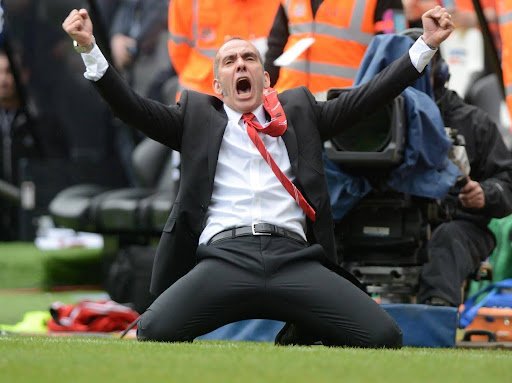
However, Newcastle’s joy was short-lived. In April 2013, Sunderland – fighting relegation – travelled to St James’ Park and stunned their rivals with a 3–0 victory. Sunderland manager Paolo Di Canio created one of the derby’s most iconic images when he slid on his knees along the touchline after Sunderland’s second goal.
That win sparked an unprecedented run of dominance for Sunderland, who went on to win the next five Tyne–Wear derbies. The streak set the record for the longest winning run in the fixture’s history before ending with a 1–1 draw in 2016.
Newcastle would not defeat Sunderland again until their FA Cup meeting in 2024.
Tyne-Wear Derby Off-Pitch Incidents and Derby Controversies
Like many fierce rivalries, the Tyne–Wear derby has also seen its share of incidents away from the pitch.
During the 1996–97 season – the first time both clubs competed together in the newly branded Premier League – Sunderland’s stadium at the time, Roker Park, was initially deemed unsafe for a full derby crowd. Away supporters were banned from attending the fixture.
Although a later compromise allowed for a limited number of away fans, Newcastle rejected the proposal after making alternate arrangements. Newcastle executives encouraged supporters to “Blame Sunderland!” for the situation, and the club responded in the reverse fixture by banning Sunderland fans from attending.
Violence between rival supporters reached a low point in 2000. While Sunderland hosted Middlesbrough F.C. and Newcastle were scheduled to play away, rival groups of hooligans clashed in the streets in what was described as one of the worst football-related fights in the United Kingdom.
After just five minutes of fighting, the groups dispersed, leaving behind weapons and pools of blood. Several people were injured, including one man who suffered permanent brain damage. More than 30 arrests were made.
Another incident in 2003 resulted in nearly 100 arrests after clashes between supporters in Sunderland’s city centre following an England European Championship qualifying match. By the end of the 2002–03 season, both Newcastle and Sunderland ranked among the top three clubs in England for football-related arrests.
There have also been several confrontations involving players and supporters. After Sunderland’s first home derby win in 28 years, fans stormed the pitch at the Stadium of Light. Newcastle midfielder Joey Barton was pelted with projectiles after taunting the crowd, resulting in 29 arrests.
Three years later, another pitch invasion occurred following a stoppage-time Sunderland equalizer. During the chaos, one fan ran up behind Newcastle goalkeeper Steve Harper and pushed him to the ground. Twenty-four arrests were made.
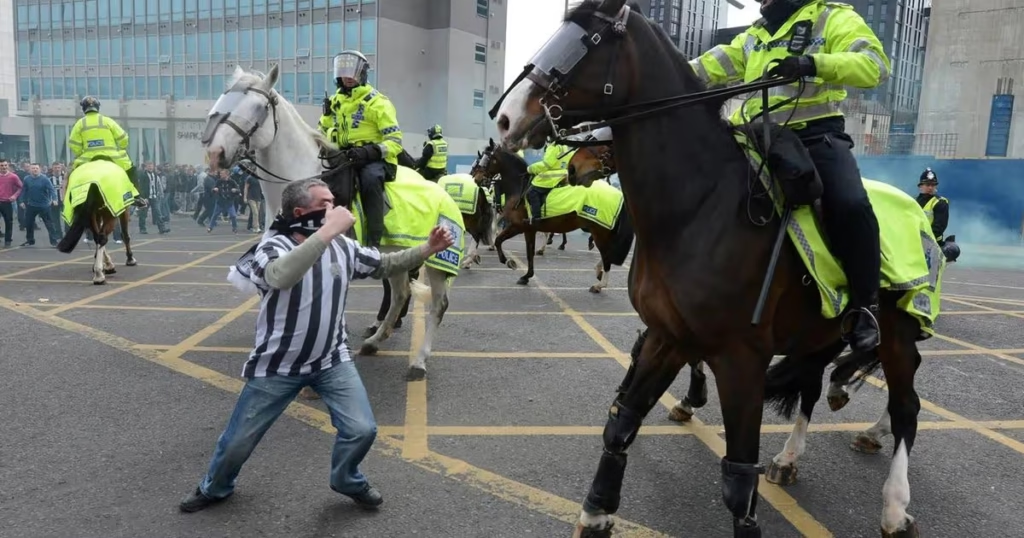
Perhaps the most infamous off-field moment occurred in 2013, when clashes broke out in the streets after the match. As mounted police attempted to disperse the crowd, one supporter punched a police horse – an incident that quickly became viral online. Twenty-nine arrests were made that evening, and the supporter responsible received a six-year ban from attending football matches.
Tyne–Wear Derby in the Modern Era
The clubs met again in the FA Cup in 2024, marking the first Tyne–Wear derby since Sunderland’s relegation from the Premier League years earlier. Newcastle secured a 3–0 victory, their first derby win since Sunderland’s six-game winning streak earlier in the decade.
With Sunderland now back in the Premier League, regular Tyne–Wear derby matches have returned for the first time in nearly a decade.
Most recently, Sunderland completed the league double in the Premier League over Newcastle United in the 2025-2026 season – winning 1-0 at home and 2-1 away at St. James’ Park. With Sunderland’s most recent completion of the league double over their Tyne-Wear rivals, they have now equalled league double wins with Newcastle United at nine a piece
References