The setting for this weekend’s marquee match of the Premier League is North London as Tottenham host Chelsea in this London Derby. Here’s our full pre-match analysis, including team news, predicted lineups, tactical preview, key stats, match prediction, and expert betting tips ahead of this exciting London derby fixture.
Odds:
| Tottenham | Draw | Chelsea | |
| American | +162 | +270 | +140 |
| Decimal | 2.62 | 3.70 | 2.40 |
| Fractional | 81/50 | 27/10 | 7/5 |
Previous Five Head-to-Head Matches
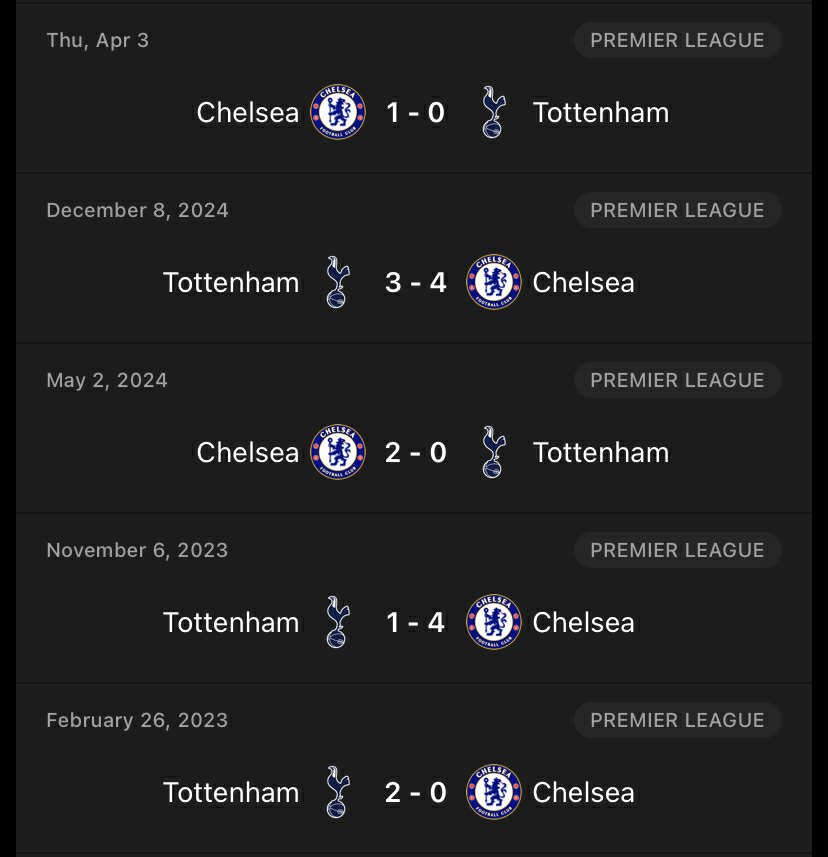
Chelsea have won four consecutive matches against Tottenham, all of which have come in the Premier League. However, Tottenham will be looking to flip the script in this match under Thomas Frank, who has quickly turned this Spurs side around.
Tottenham Team News
Tottenham’s last Premier League outing saw them take all three points at the new Hill Dickinson Stadium, where Everton played host. Midweek, Spurs faced Newcastle United away in the EFL Cup, where they fell 2–0 to the Magpies. Fortunately for Tottenham, they were able to rotate their squad in that cup tie, allowing some much-needed rest for players who have had a heavy workload.
Young midfielder Archie Gray suffered an injury in training just days prior to their EFL Cup clash, slightly overshadowing their midweek defeat. Cristian Romero, Dominic Solanke, Destiny Udogie, Radu Drăgușin, Ben Davies, Yves Bissouma, Dejan Kulusevski, and James Maddison are all currently unavailable due to injury – making Tottenham one of the more injury-riddled sides in English football at the moment.
Chelsea Team News
Chelsea were victorious midweek away at Wolves, winning 4–3 in the EFL Cup to advance to the next round. That result followed their 2–1 defeat to Sunderland last weekend in the Premier League.
Liam Delap made his long-awaited return to the Chelsea squad on Wednesday after nearly two months out with injury. However, his comeback was short-lived; after just 26 minutes on the pitch, Delap picked up two yellow cards and was sent off, ruling him out of Chelsea’s clash with Tottenham.
Out for Chelsea this weekend through injury are Cole Palmer, Benoît Badiashile, Dário Essugo, and Levi Colwill.
Predicted Starting Lineups

Tottenham Lineup Notes
I believe Mohammed Kudus is better suited to the wide position, so I have him starting on the wing over Brennan Johnson. That said, Johnson provided plenty of attacking intent against Everton, and having both players on the right-hand side again could be an option Thomas Frank explores.
Tottenham’s central midfield duo of Rodrigo Bentancur and João Palhinha have been vital to this side and will likely continue in their usual roles. Vicario will retain his spot between the posts, where he has been in red-hot form recently.

Chelsea Lineup Notes
Chelsea are blessed with so much talent at their disposal that predicting their starting XI is no easy task, but here’s my best guess. João Pedro struggled in the No. 10 role last weekend, while Marc Guiu has yet to get going up front. With Liam Delap suspended, Enzo Maresca may look to deploy Pedro as the central striker again, with Andrey Santos potentially stepping into midfield.
Santos could operate either in the No. 10 role or drop into his more natural position as a defensive midfielder, allowing Enzo Fernández to push further forward into the attacking midfield role.
Match Preview
Thomas Frank materialized a fantastic plan for Tottenham’s approach to their match against Everton last weekend, and if Frank applies similar tactics in this match, Chelsea could find themselves in trouble.
Tottenham set up on paper in a 4-2-3-1 shape; however, their formation constantly shifts and evolves throughout each phase of play. [See image below]
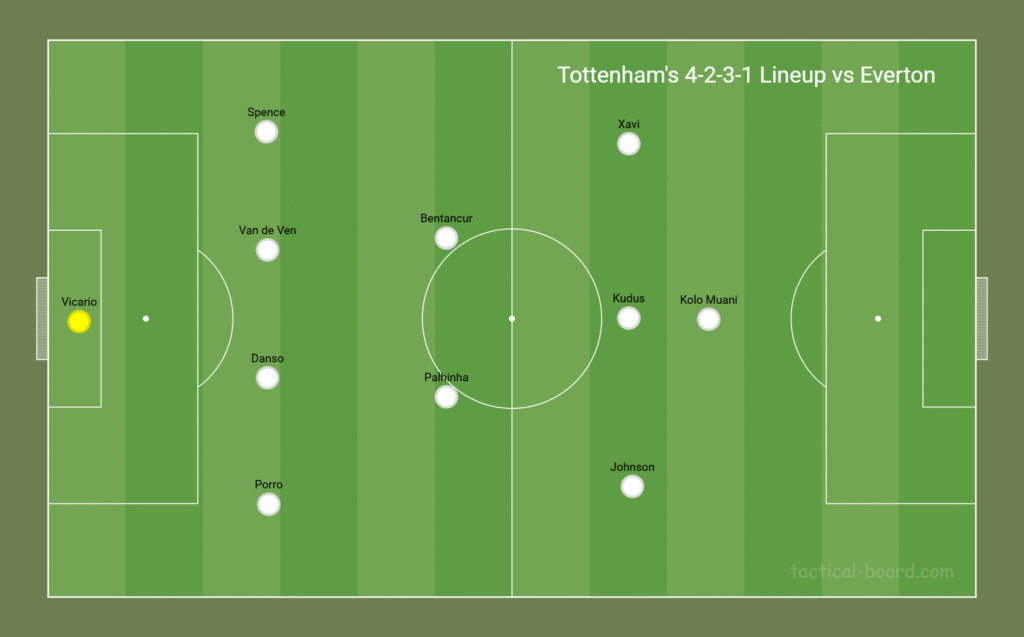
The image above shows Tottenham’s starting XI versus Everton last weekend. Their 4-2-3-1 shape is highly flexible, particularly in attack, as left back Djed Spence pushes higher up the pitch. This movement allows Xavi Simons to invert into a No. 10 role on Tottenham’s left side, while Kudus drifts into the right-central half-space, effectively giving Tottenham two No. 10s.
In build-up, Xavi and Kudus look to create a trapezoid shape with the two defensive midfielders, offering more central passing options to help progress the ball up the pitch. [See image below]
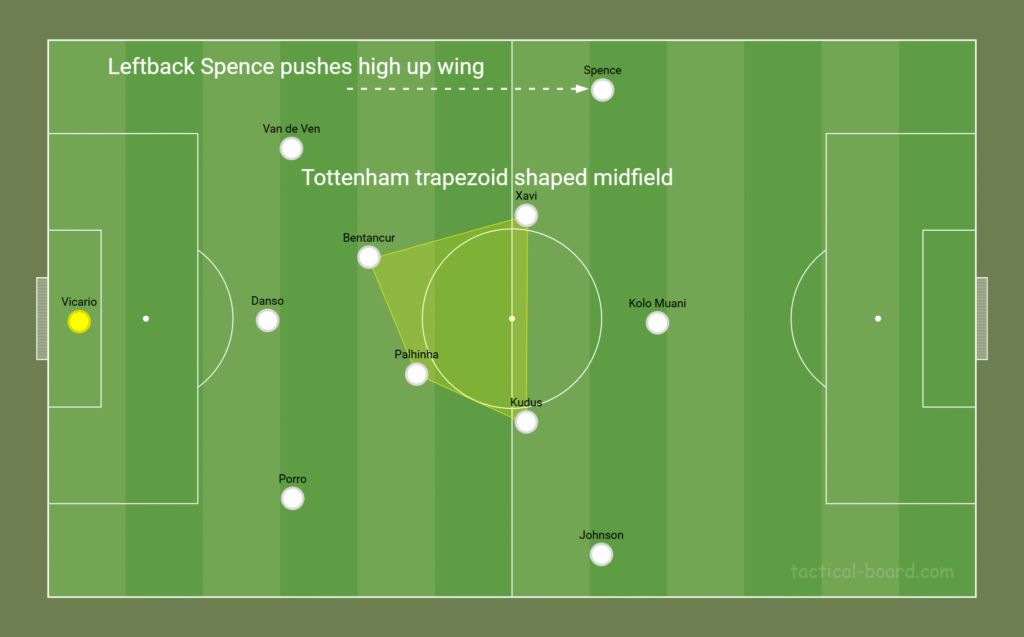
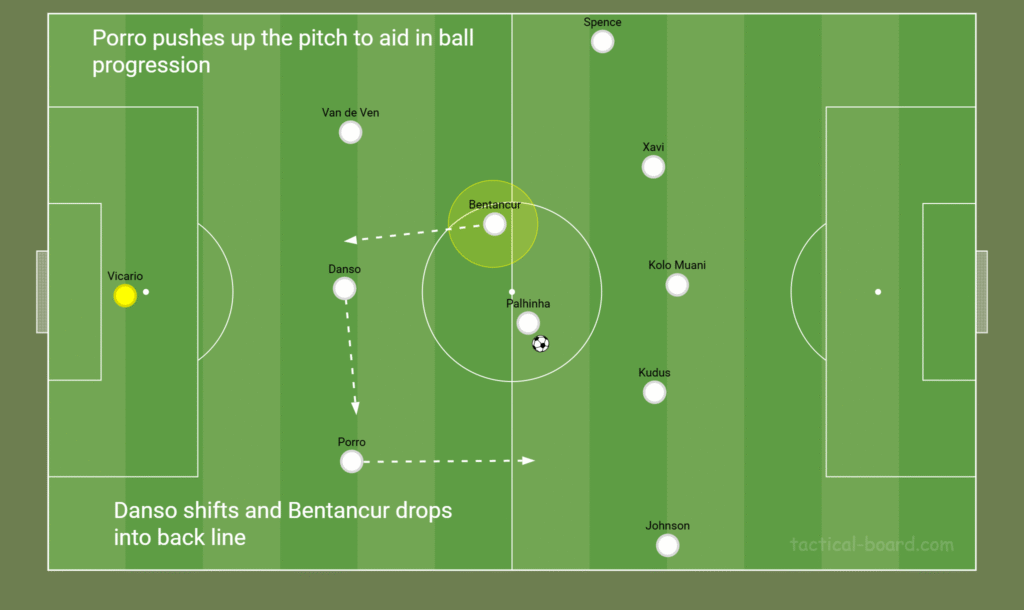
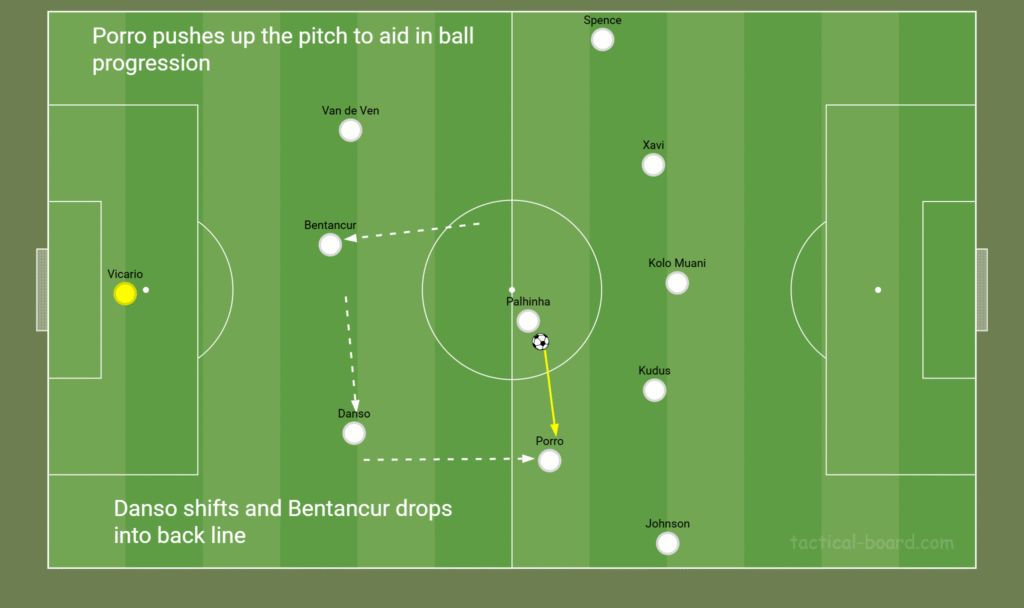
Bentancur and Palhinha both have the ability to operate as pivots thanks to their awareness and composure on the ball, while also possessing the defensive instincts to drop deeper when necessary. When Tottenham advance higher up the pitch, they transition into a back three consisting of their two centre-backs and right back Pedro Porro, who tucks in more centrally.
Tottenham do an excellent job of ensuring their attacking and build-up structure does not leave them exposed to opposition counterattacks when possession is lost. Any time a member of the back line pushes forward, Bentancur or Palhinha are quick to drop into the defensive line to provide cover. [See images below]
Tottenham’s ultimate aim in ball progression is to attack in a 3-2-5 structure, with their attacking players rotating and interchanging positions to create space and passing lanes. Their 3-2-5 setup relies heavily on the presence of two No. 10s operating in the half-spaces, while the wingers hold width to stretch the pitch and pull the opposition’s defensive shape apart. [See images below]
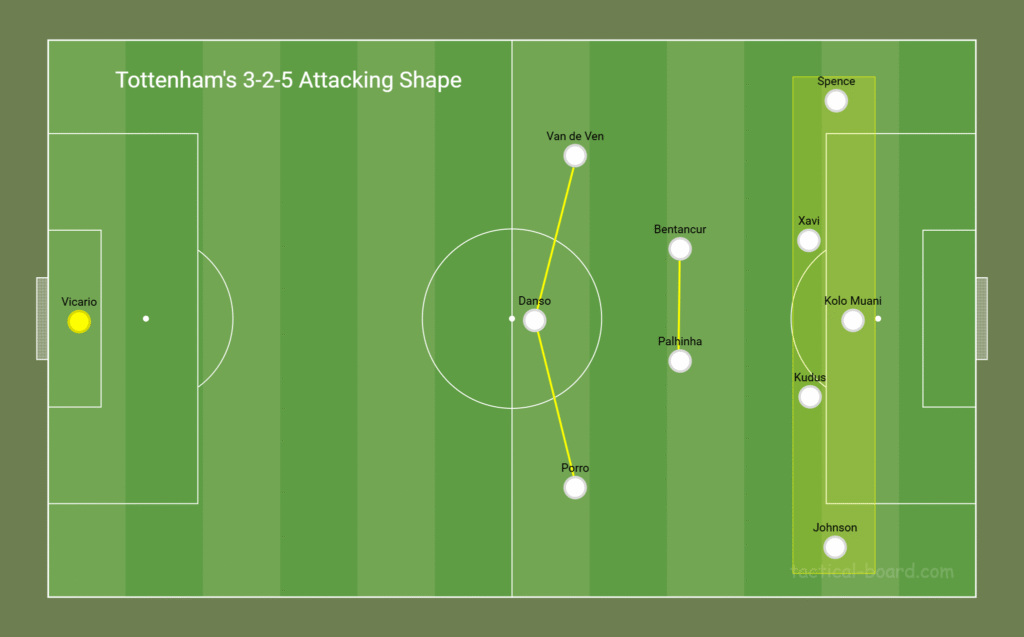
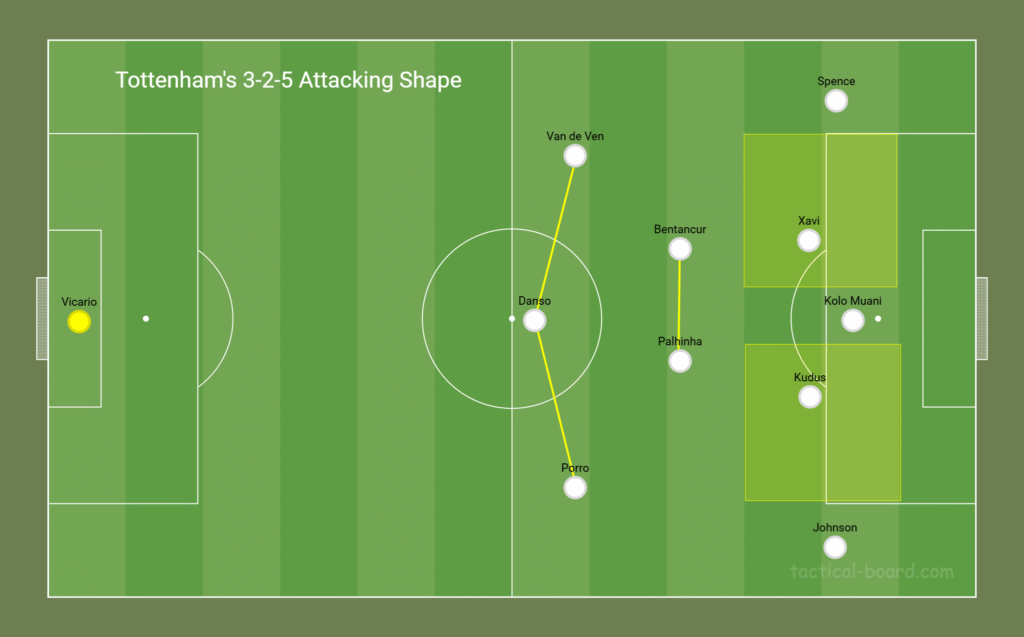
Tottenham’s two 10s frequently drop out of the attacking line of five, moving into pockets of space in front of the opposition’s back line to receive the ball and open up forward passing options.
Tottenham’s style of play in sustained possession and in their opposition’s half gives them the ability to position four players on the side of possession in close proximity, creating numerical advantages in the wide channels of the pitch. [See images below]
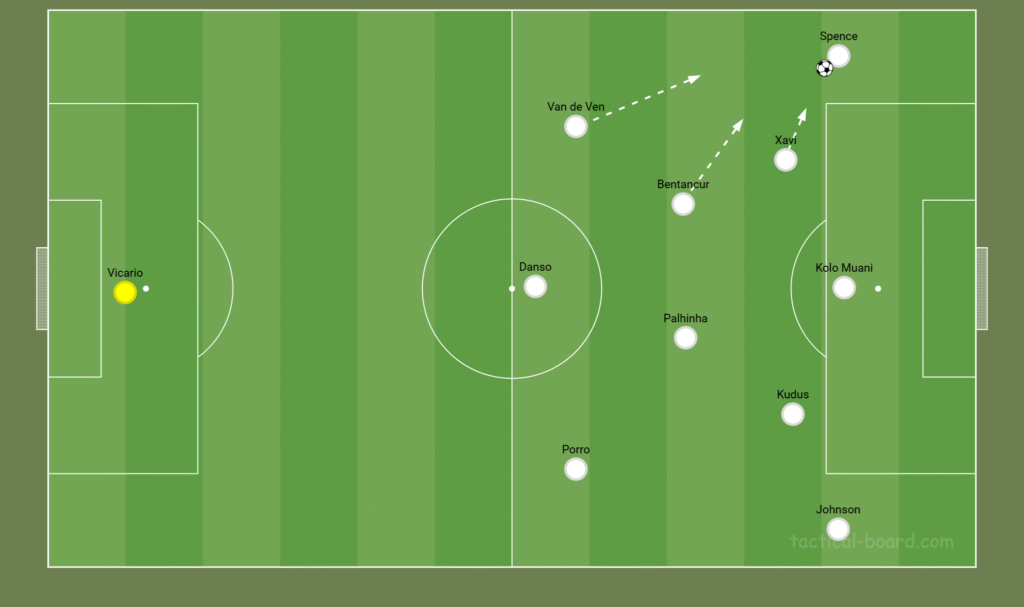
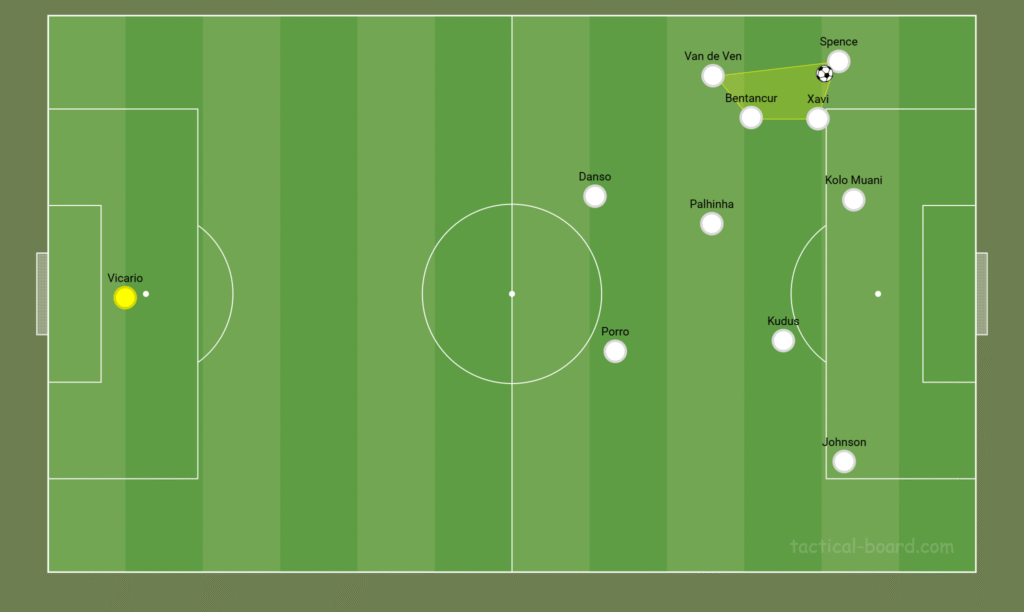
Tottenham’s attacking structure is highly disciplined, ensuring they remain covered in the event of a turnover while maintaining fluid rotations. Their coordinated movement opens passing lanes, creates overloads on either flank, and constantly looks to generate space for forward passes. Chelsea’s defensive shape will need to remain compact and organized to handle this well-drilled Tottenham attack.
Chelsea possess significant pace on the counter-attack, particularly through their wide players, but given Tottenham’s stability during defensive transitions, those opportunities could be limited or, at the very least, less effective than usual.
Tottenham’s player rotations and positional shifts toward the side of possession have the potential to pull Chelsea out of their defensive shape, creating openings in behind, especially in the half-spaces.
Defensively, Tottenham once again demonstrate flexibility in their setup. Their main vulnerability without the ball comes from their high-block shape. During opposition build-up and progression, Tottenham often adopt a 4-2-4 formation, with their wingers and attacking midfielder joining the first line of pressure. [See image below]
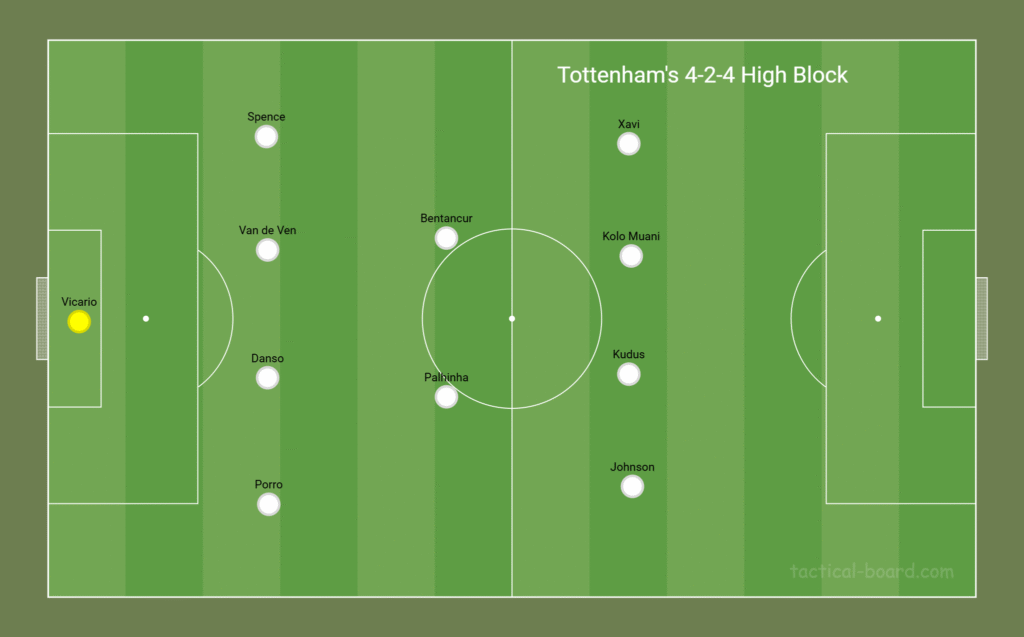
This 4-2-4 shape can be exposed by line-breaking passes, as it leaves limited numbers in central midfield. Chelsea will need to exploit this by progressing quickly through the middle, though that will be challenging given their current centre-back situation. With Tosin, Acheampong, and Chalobah as the available options, Chelsea may struggle to execute those incisive passes under pressure.
Tottenham’s 4-2-4 shape transitions quickly into a stable 4-4-2 defensive setup, with the wingers dropping into the midfield line and the attacking midfielder remaining high alongside the centre forward. [See images below]
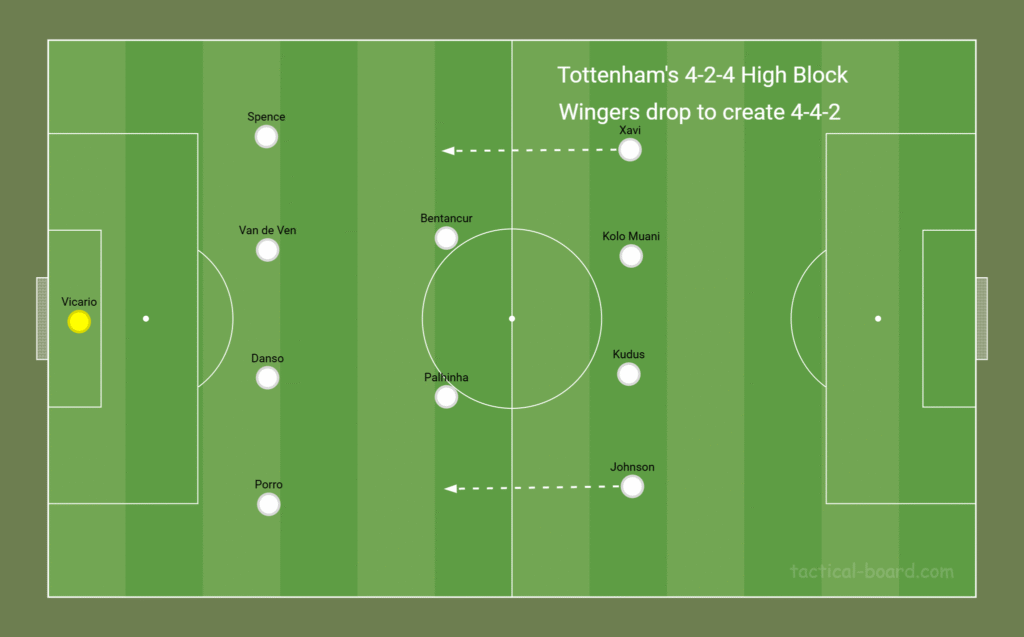
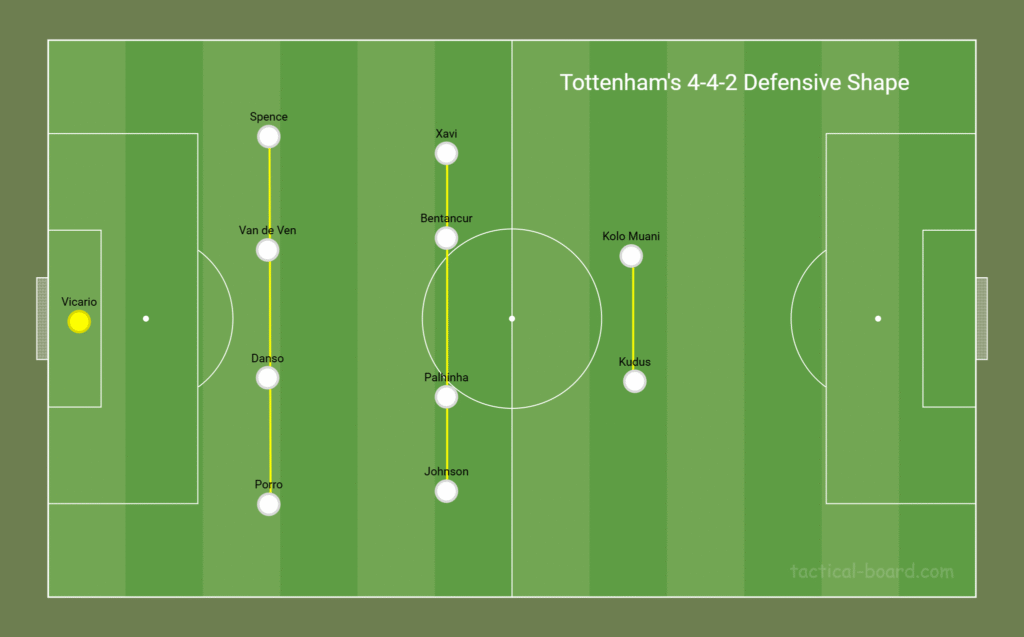
Historically, a 4-4-2 shape can be susceptible to passes played through the lines, but Tottenham’s version is well-drilled. While their 4-2-4 can be exposed centrally, their 4-4-2 is far more compact. In this shape, Tottenham use a man-marking scheme, with their central midfielders shadowing their direct opponents to remove passing options. This strict man-marking approach effectively limits opposition buildup from the back.
When defending deep in their final third, Tottenham become extremely compact and aggressive in their marking, closing space between the lines and denying attacking players time on the ball.
Where Chelsea may find joy against Tottenham is in the wide areas. Chelsea typically attack with width, stretching the pitch, and Tottenham appear willing to concede space in these wide lanes while protecting the central zones. Spurs are comfortable defending crosses into the box, as Chelsea currently lack a significant aerial threat in attack.
Turning to Chelsea, their side has both strengths and weaknesses, as expected. One of their main struggles recently, largely due to a lengthy injury list, has been their build-up and progression phase. Robert Sánchez remains a liability in possession, which effectively removes him as a reliable passing option during Chelsea’s buildup play.
Chelsea generally set up in a 4-2-3-1 formation. [See image below]
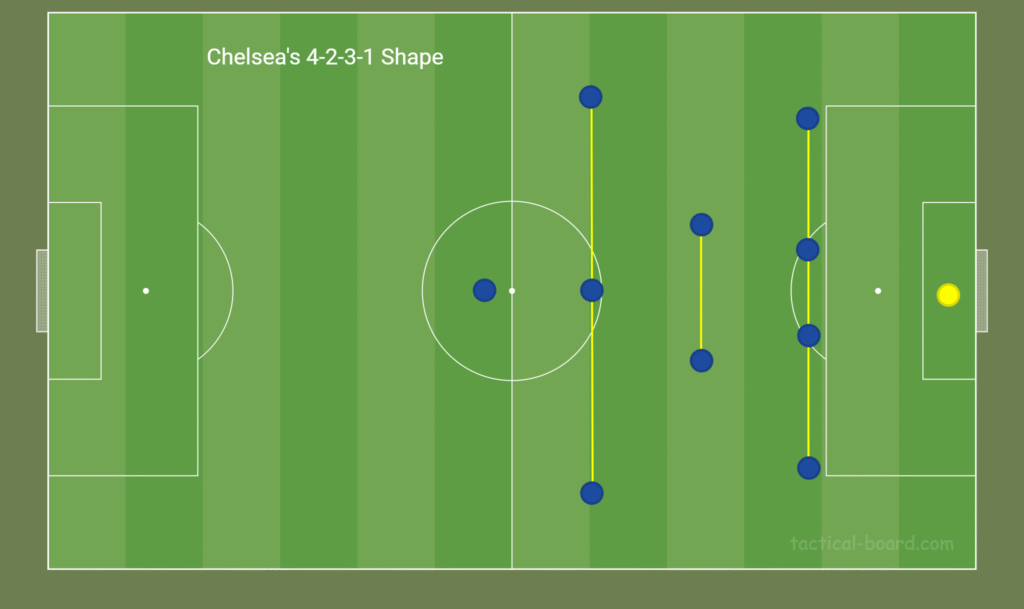
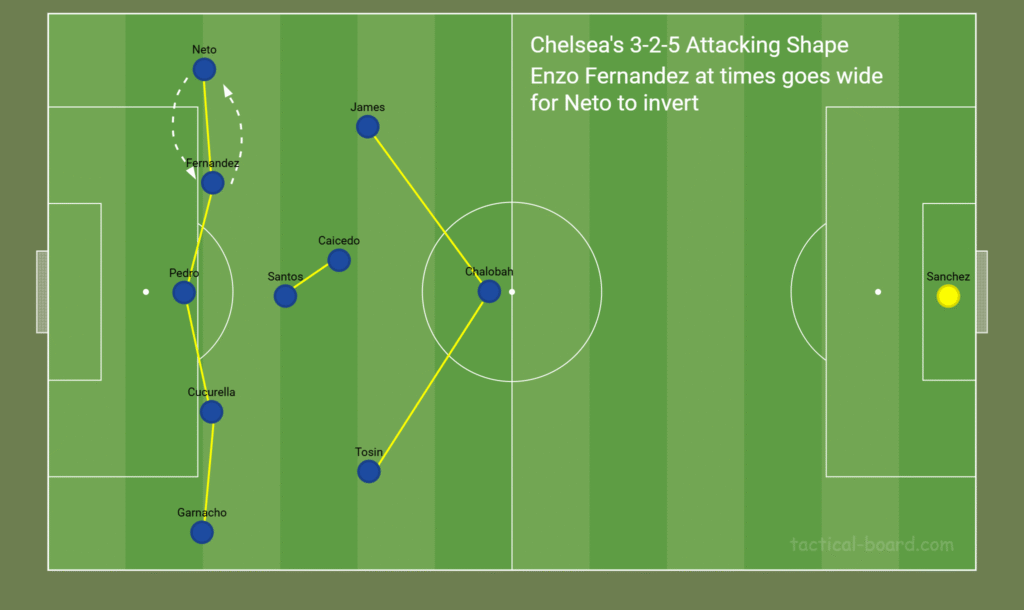
Chelsea’s main objective during their progression up the pitch is to transition from a 4-2-3-1 into a 3-2-5 attacking shape. This is achieved by pushing Cucurella high up the pitch from left back and allowing Enzo Fernández to advance from central midfield into the attacking line. [See image below]
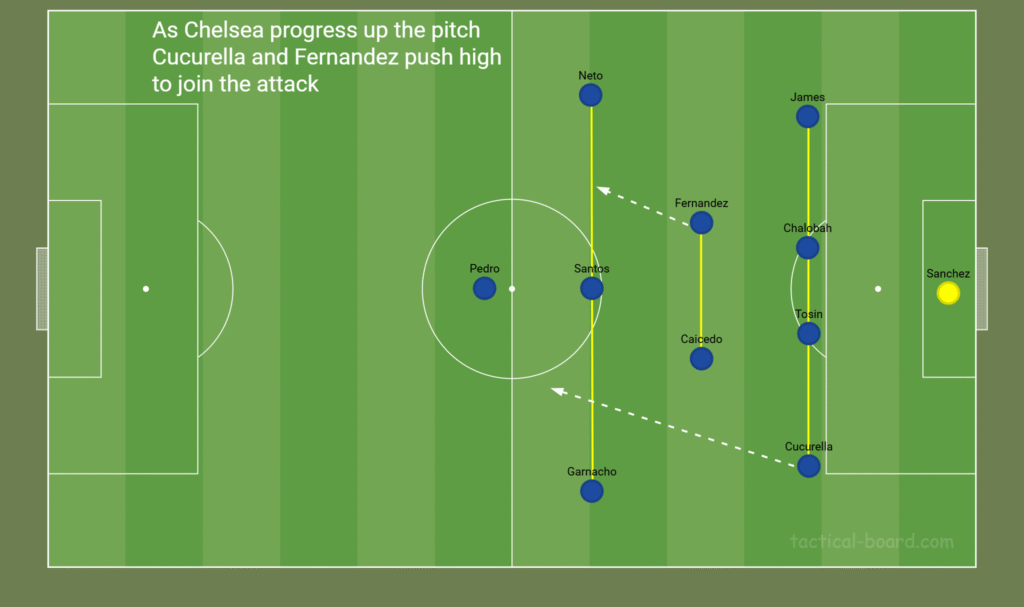
In theory, against Tottenham’s 4-2-4 high block, Chelsea’s back line should be able to play line-breaking passes through the first line of pressure. However, their current central defenders often struggle to pick out the right passes during this phase. Tottenham’s pressing system is man-oriented, with one attacker closing down the centre-back in possession while the remaining forwards and midfielders man-mark tightly to remove progressive passing options. As a result, Chelsea could face difficulties in their buildup, with Tottenham well positioned to force turnovers high up the pitch.
When the ball is advanced into the opposition half, Chelsea look to maintain a 3-2-5 attacking structure, with Cucurella joining the attacking line in the left half-space and Enzo Fernández also pushing forward. [See image below]
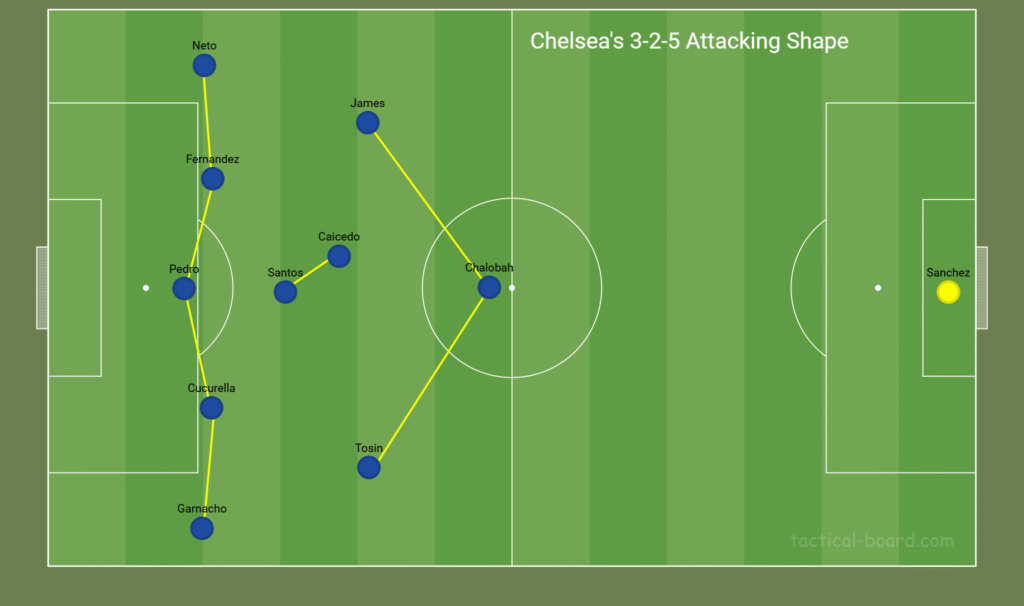
At times, Fernández will rotate out wide, taking up a position on the wing to allow his winger to move inside and become a more central goal threat. [See image below]
Chelsea’s midfield setup differs significantly from Tottenham’s. While Tottenham’s central duo operate in tandem, shifting together, dropping into the back line when needed, and remaining cautious when stepping higher, Chelsea’s midfield pairing is more vertically oriented. Their defensive midfielder, Caicedo, typically holds the pivot role, while the No. 10 plays higher up the pitch, just off the forward line. This leaves Chelsea’s midfield often stretched vertically rather than compact diagonally or horizontally.
With the No. 10 positioned so high above Caicedo in attack, Enzo Maresca’s side frequently push their defensive line high, at times leaving only one player back to cover the opposition striker. This allows Chelsea’s defenders to act as passing outlets, recycling possession from the wings into central areas. The advantage of this approach is that it forces opponents to become compact and retreat deeper, enabling Chelsea to sustain long spells of possession and probe for openings.
The drawback, however, is that Chelsea’s current defenders, excluding Reece James, are not particularly strong ball players. This makes them vulnerable to errors under pressure. Tottenham’s defensive setup thrives on compactness and man-marking, taking away passing options and forcing rushed or misplaced passes. As a result, Chelsea’s attacking style of play may end up playing directly into Tottenham’s defensive strengths.
Chelsea’s high defensive line and reliance on defenders to initiate attacks also leave them susceptible to counterattacks. Tottenham’s counter-attacking approach is straightforward but highly effective: get the ball forward quickly. When Spurs regain possession, Vicario or one of the centre-backs will hold the ball briefly, allowing the attacking players to sprint forward before launching a long pass over the top for the runners to chase.
Given Chelsea’s commitment to pushing their defensive line high and involving it heavily in attacking play, they risk being caught out if possession is lost. Should that happen, Tottenham have every chance of capitalizing on the counter.
Betting Tips
Pick: Tottenham Win – Draw No Bet
Odds:
- American: +100
- Decimal: 2.00
- Fractional: 1/1
I like Tottenham in this match. The Draw No Bet market removes the risk of a draw, refunding the wager if the match ends level.
If Tottenham approach this match against Chelsea with a similar tactical setup to their game against Everton, they should find success. Their tight man-marking system and compact defensive shape could leave Chelsea struggling to break them down, while also opening counter-attacking opportunities for Tottenham’s forwards — particularly given Chelsea’s current injury issues in defense. Tottenham’s attack looks stronger now, with players settling into preferred roles and contributing quality across the pitch.
I’m impressed by Tottenham’s defensive stability, their structured attacking shape that transitions seamlessly into defense, and their ability to shift and manipulate Chelsea’s defensive line to create openings and scoring chances.
If all else fails, Tottenham also hold an advantage over Chelsea in aerial duels and set-piece situations.
Pick: Tottenham Win – Draw No Bet
Disclaimer: The betting picks and analysis shared are for informational purposes only and are not guarantees of outcome or financial advice. Please gamble responsibly and only risk money you are willing to lose.