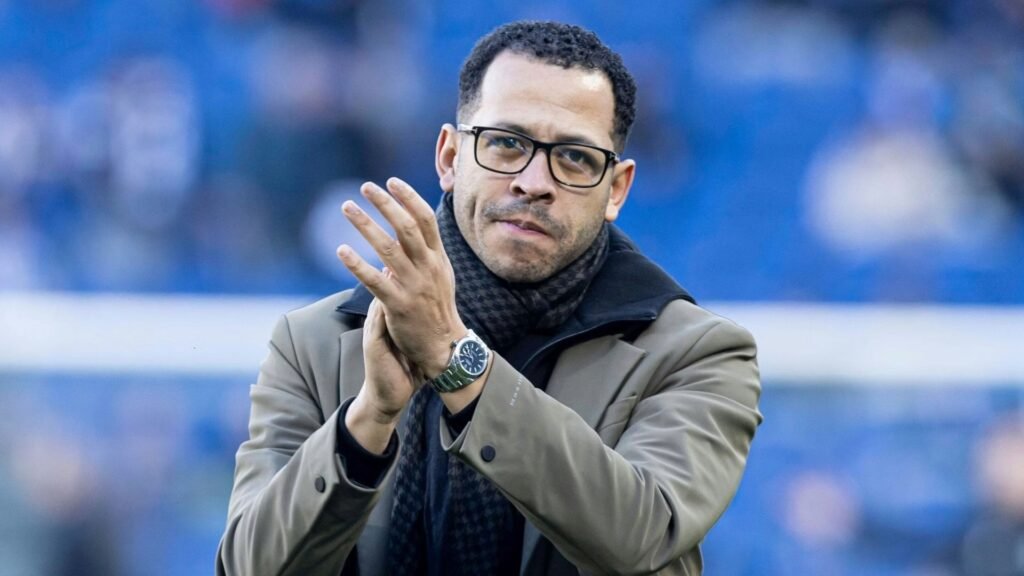
Arsène Wenger. Sir Alex Ferguson. Jurgen Klopp. Pep Guardiola.
These names are synonymous with stability and long-term vision in the Premier League. While some clubs have trusted the process and backed their managers through difficult spells, others have taken a very different approach.
Over the past decade, several clubs have cycled through managers at a staggering rate. In this article, we examine the five current Premier League clubs with the highest managerial turnover in the last 10 years – highlighting the instability, short-lived tenures, and rare success stories along the way.
1. Sunderland (19 Managers since 2016)
Manager Timeline
- Sam Allardyce (October 2015 – July 2016)
- David Moyes (July 2016 – May 2017)
- Simon Grayson (June 2017 – October 2017)
- *Robbie Stockdale/Billy McKinlay (October 2017 – November 2017)
- Chris Coleman (November 2017 – April 2018)
- *Robbie Stockdale (April 2018 – May 2018)
- Jack Ross (May 2018 – October 2019)
- *James Fowler (October 2019)
- Phil Parkinson (October 2019 – November 2020)
- *Andrew Taylor (November 2020 – December 2020)
- Lee Johnson (December 2020 – January 2022)
- *Mike Dodds (February 2022)
- Alex Neil (February 2022 – August 2022)
- *Martin Canning (August 2022)
- Tony Mowbray (August 2022 – December 2023)
- *Mike Dodds (December 2023)
- Michael Beale (December 2023 – February 2024)
- *Mike Dodds (February 2024 – May 2024)
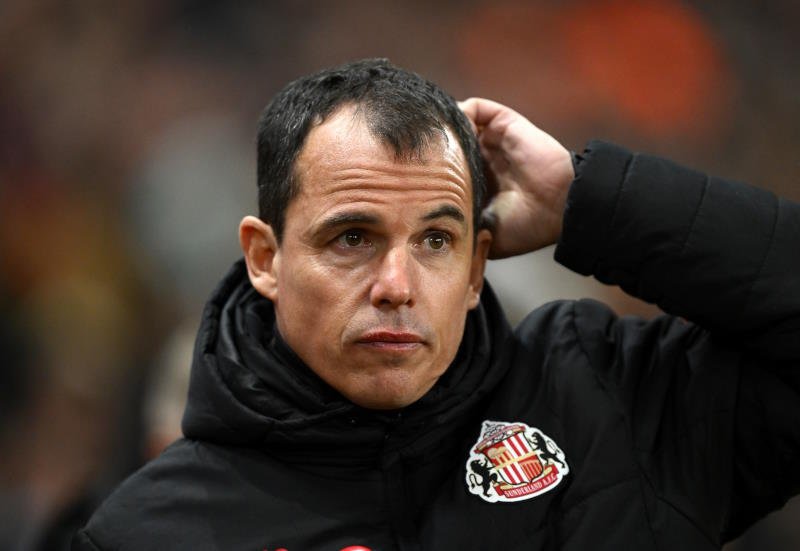
- Régis Le Bris (July 2024 – present)
*Italicized names indicate interim or caretaker manager positions.
Sunderland top this list with 19 managerial appointments since 2016 – a reflection of one of the most turbulent decades in English football.
Sunderland’s Premier League Exit
Sam Allardyce (Oct 2015 – July 2016) was in charge from October 2015 until July 2016. Allardyce went 9-9-13 in his 31 matches, saving Sunderland from relegation to the English Football League (EFL) Championship. Allardyce would leave Sunderland in July 2016.
David Moyes (July 2016 – May 2017) was hired in July 2016. Moyes would only win six Premier League matches, subsequently finishing in 20th position of the Premier League and having the club relegated to the EFL Championship. After the final day of the season, Moyes would resign from his position as Sunderland manager.
Sunderland’s Double Relegation and League One Chaos
Simon Grayson (June 2017 – October 2017) was hired to lead Sunderland during their first season back in the Championship in over 10 years. Sunderland managed just one league victory in the first 3 months of the season and Grayson was dismissed on October 31, 2017. Robbie Stockdale and Billy McKinlay oversaw the club as caretakers for the next two matches, picking up a draw and a loss.
Chris Coleman (November 2017 – April 2018) was hired on November 19, 2017. Under Chris Coleman, Sunderland would confirm their second straight relegation – falling from the Premier League to the EFL League One in subsequent seasons – and Coleman was dismissed on April 29, 2018 prior to the final match of the season. Robbie Stockdale would reprise his role as caretaker for the final match of the season, which Sunderland managed to win.
Jack Ross (May 2018 – October 2019) would become manager of Sunderland on May 25, 2018, to oversee the club’s first season in the third division since 1988. Ross would lead Sunderland to a record of 22-19-5 in the 2018-19 season, good enough for fifth place in the league and a spot in the League One playoff. Sunderland would ultimately lose to Charlton Athletic in the playoff finals and remain in League One. Sunderland would also reach the finals of the EFL Trophy, losing to Portsmouth in the finals. Ross would be dismissed from his position the following season in October 2019, while Sunderland sat in sixth place in the league table. James Fowler was assigned as club caretaker but did not oversee any matches.
Phil Parkinson (October 2019 – November 2020) was hired on October 17, 2019. Parkinson would finish the 2019-20 season with 11 wins, 7 draws, and 7 losses. Sunderland sat in 8th place in the table with an overall record of 16 wins, 11 draws, and 9 losses. The league was stopped in March 2020 in response to the COVID-19 pandemic. As a result, Sunderland would not qualify for the playoffs. Parkinson would remain in charge until November 29, 2020. He was dismissed after starting the season with a 6-5-2 record. Andrew Taylor was assigned as caretaker and oversaw one match in charge which his Sunderland side drew.
Lee Johnson (December 2020 – January 2022) was hired on December 5, 2020. Despite losing his first match, Johnson would have a successful season picking up 14 wins, 11 draws, and 7 losses after taking charge. Sunderland would qualify for the League One playoffs but did not manage to reach the finals. Sunderland would win the EFL Trophy in 2021, with Johnson having managed all games following the group stage. Johnson would begin the next season with a strong start, winning 5 of their first 6 matches. Sunderland were unable to keep up their strong performance, however, and Johnson was dismissed on January 30, 2022, following a 6-0 defeat to Bolton Wanderers. Mike Dodds would oversee the club as caretaker for two matches.
Promotion and Renewed Instability
Alex Neil (February 2022 – August 2022) Alex Neil would go on to pick up 8 wins, 6 draws, and only a single defeat to qualify for the League One playoffs. With a 2-1 aggregate win over Sheffield Wednesday and a 2-0 victory over Wycombe in the League One playoff final, Sunderland would secure promotion back to the Championship. Neil would leave Sunderland the following season to take charge for Stoke City after starting the next season with 2 wins, 2 draws, and a loss. Martin Canning would oversee one match as caretaker.
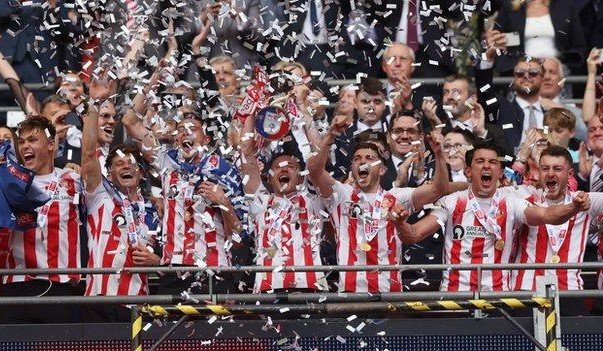
Tony Mowbray (August 2022 – December 2023) would take over on August 30, 2022. Over the rest of the season, Sunderland would pick 16 wins, 13 draws, and 11 losses. A strong stretch of results to close out the season would have them qualify for the Championship playoffs – losing 3-2 on aggregate to Luton Town in the semi-final. After starting the next season with a record of 8-3-8, Mowbray was dismissed with Sunderland sitting in 9th position midway through the season. Mike Dodds would take over as Caretaker again, picking up 2 wins and a draw.
Michael Beale (December 2023 – February 2024) was next to take over this turbulent Sunderland side. Beale would pick up 4 wins, 2 draws, and 5 losses during his tenure with the Black Cats.
Michael Beale (December 2023 – February 2024) was next to take over this turbulent Sunderland side. Beale would pick up 4 wins, 2 draws, and 5 losses during his tenure with the Black Cats.
Outside of the league, Beale lost to Tyne-Wear derby rivals Newcastle in the FA Cup, 3-0. Beale was involved in several controversies, including comments made about the “negativity” of Sunderland fans and was accused of having a burner account on Twitter – retweeting posts that were positive of him and critical of Sunderland fans and ownership.
Beale was sacked on February 19, 2024, after just 63 days in charge of the club. Beale’s time with Sunderland marked the shortest tenure for an official manager in Sunderland history. Mike Dodds would take over for the remainder of the season, going 2-3-8.
Sunderland Return to the Premier League
Régis Le Bris (July 2024 – present) was hired to take over Sunderland to start the following season. Le Bris would finish his first season in charge with a record of 21 wins, 13 draws, and 12 losses. This would be enough to qualify for the Championship playoffs and give Sunderland a chance at returning to the English Premier League. A 3-2 aggregate victory over Coventry City and a 2-1 win in the finals over Sheffield United would see Sunderland return to the English top-flight for the first time in nearly 10 years.
2. Nottingham Forest (16 managers since 2016)
Manager Timeline
- Dougie Freedman (February 2015 – March 2016)
- *Paul Williams (March 2016 – May 2016)
- Philippe Montanier (June 2016 – January 2017)
- *Gary Brazil (January 2017 – March 2017)
- Mark Warburton (March 2017 – December 2017)
- *Gary Brazil (December 2017 – January 2018)
- Aitor Karanka (January 2018 – January 2019)
- *Simon Ireland (January 2019)
- Martin O’Neill (January 2019 – June 2019)
- Sabri Lamouchi (June 2019 – October 2020)
- Chris Hughton (October 2020 – September 2021)
- *Steven Reid (September 2021)
- Steve Cooper (September 2021 – December 2023)
- Nuno Espírito Santo (December 2023 – September 2025)
- Ange Postecoglu (September 2025 – October 2025)
- Sean Dyche (October 2025 – February 2026)
- Vitor Pereira (February 2026 – present)
Nottingham Forest have appointed 16 managers since 2016, reflecting years of Championship inconsistency before their eventual return to the Premier League.
Championship Instability
Dougie Freedman (February 2015 – March 2016) managed Nottingham Forest until March 13, 2016. During the 2015/16 season, Freedman had a record of 11 wins, 12 draws, and 13 losses in the Championship before his dismissal. Paul Williams took over as caretaker and picked up 2 wins, 4 draws, and 4 losses to finish the season.
Philippe Montanier (June 2016 – January 2017) was hired prior to the start of the 2016/17 season. After a poor start to the season – going 9-6-15 in all competitions and only managing 7 league victories in contrast to 13 defeats – Montanier was dismissed on January 14, 2017.
Following this, Mark Warburton (March 2017 – December 2017) took over the club. He closed out the season with 3 wins, 2 draws, and 4 losses. Forest narrowly avoided relegation on goal differential and would remain in the Championship. The following season, Warburton would pick up 10 wins, 1 draw, and 14 losses prior to his eventual sacking. Following a string of poor results in December 2017, Warburton was dismissed. Gary Brazil would take over as caretaker again.
Following Mark Warburton’s sacking, Nottingham Forest went on to go through four permanent managers and two caretaker managers between December 2017 – September 2021.
The Steve Cooper Transformation
Steve Cooper (September 2021 – December 2023) was hired on September 21, 2021. Despite Forest being bottom of the table when he took over, Cooper would manage 22 wins, 10 draws, and only 6 defeats to finish in 4th place and qualify for the Championship playoffs for the 2021/2022 season. A 1-0 win over Huddersfield Town in the finals would secure Forest’s promotion to the Premier League – their first time back in the top-flight in over 20 years.
Cooper would remain in charge for the 2022/23 season – Forest’s first season back in the English top-flight. With a record of 9-11-18, Forest would avoid relegation by 4 points. Cooper would begin the next season in charge but was dismissed in December after a stretch of 5 league defeats in 6 matches. Over his 108 matches in all competitions, Cooper finished with a record of 42-27-39.
Continued Instability in the Premier League
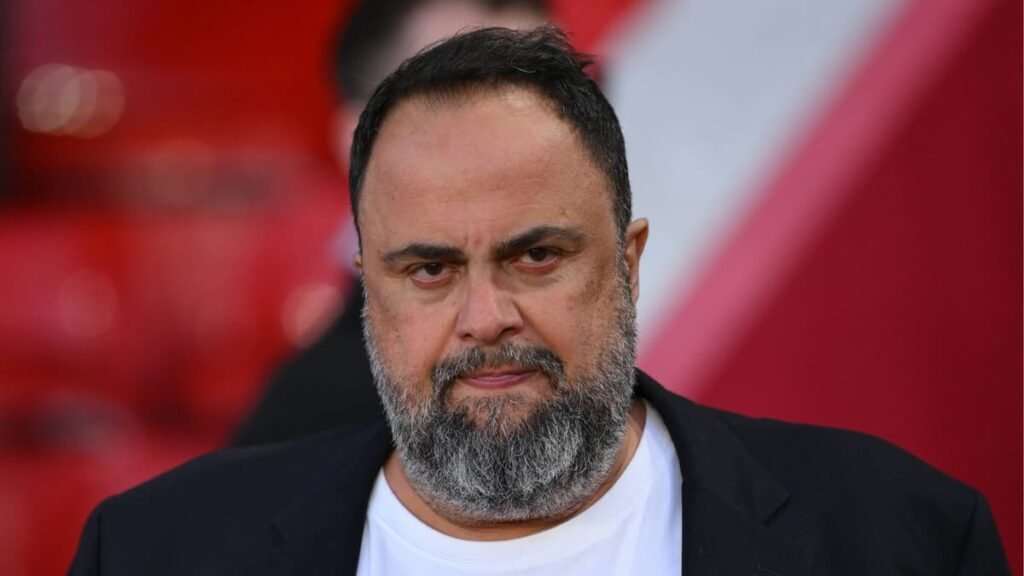
Nuno Espírito Santo (December 2023 – September 2025) was hired on December 20, 2023. Santo would close out the season with 6 wins, 4 draws, and 11 losses, avoiding relegation by 6 points. Santo would have Forest’s best season of the 21st century, finishing in 7th place with a record of 19-8-11 and qualifying for the UEFA Europa League for the first time in 30 years following Crystal Palace’s removal from the competition due to multi-club ownership regulations. Forest would also make a strong run in the FA Cup before falling to Manchester City in the semi-finals. Despite these results, Santo was dismissed 3 games into the 2025/26 season following public disagreements with club owner, Evangelos Marinakis. He had amassed 1 win, 1 draw, and 1 loss in the 25/26 season prior to his dismissal.
On September 9, 2025, Ange Postecoglu (September 2025 – October 2025) was hired as manager. Postecoglu won the UEFA Europa League with Tottenham just the season prior. He was sacked after only 39 days in charge of Nottingham Forest. Postecoglu failed to win any games with Forest, drawing 2 and losing 6 in all competitions.
Sean Dyche (October 2025 – February 2026) was hired as Ange’s replacement on October 21, 2025. Dyche collected 6 wins, 4 draws, and 8 losses in the Premier League. He was dismissed on February 12, 2026, after a scoreless draw against bottom-of-the-table Wolverhampton. During his time in charge, Dyche would have success in the Europa League, picking up 4 wins, 1 draw, and 2 losses to qualify for the knockout rounds.
Vítor Pereira (February 2026 – present) is Forest’s current manager since February 15, 2026.
3. Everton (14 managers since 2016)
Manager Timeline
- Roberto Martinez (July 2013 – May 2016)
- *David Unsworth/Joe Royle (May 2016)
- Ronald Koeman (June 2016 – October 2017)
- *David Unsworth (October – November 2017)
- Sam Allardyce (November 2017 – May 2018)
- Marco Silva (May 2018 – December 2019)
- *Duncan Ferguson (December 2019)
- Carlo Ancelotti (December 2019 – June 2021)
- Rafael Benítez (June 2021 – January 2022)
- *Duncan Ferguson (January 2022)
- Frank Lampard (January 2022 – January 2023)
- Sean Dyche (January 2023 – January 2025)
- *Leighton Baines/Séamus Coleman (January 2025)
- David Moyes (January 2025 – present)
For over a decade under David Moyes (2002–2013), Everton represented stability in the Premier League. Since 2016, however, that identity has shifted dramatically. The club has cycled through 14 managerial changes in less than ten years – and notably, many of those appointments have been high-profile, big-name managers brought in to restore Everton’s former stature.
Turbulent Times for the Toffees
Roberto Martinez’s (July 2013 – May 2016) dismissal marked the beginning of Everton’s managerial turbulence. After three seasons in charge, Martinez was sacked following a ten-game stretch in which Everton managed just one win. Despite reaching two domestic cup semi-finals during his tenure, defensive frailties and declining league form ultimately led to his departure just prior to the conclusion of the 2015/16 Premier League season. David Unsworth and Joe Royle oversaw the final match of the 2015/16 season – a victory – before a new era began.
Ronald Koeman (June 2016 – Oct 2017) was announced as the new Everton manager for the 2016/17 season. Koeman’s first season was promising: a 17-10-11 league record secured seventh place and Europa League qualifying rounds for the Toffees. Koeman could not replicate his success the following year however – leading to his sacking on October 23, 2017 as Everton sat in the relegation zone. He had a league record of 2 wins, 2 draws, and 5 losses that season prior to being sacked. He had also lost 2 games and drawn 1 in the Europa League. David Unsworth was assigned as caretaker for the next 8 matches, going 2-1-5 in all competitions.
Sam Allardyce (November 2017 – May 2018) was appointed to steady the ship. While performances were often pragmatic, he guided Everton to an eighth-place finish with a 9-6-8 league record. Despite achieving mid-table security, Allardyce departed at the end of the season as the club sought a more progressive direction.
Marco Silva (May 2018 – December 2019) was hired ahead of the 2018/19 season. Marco Silva delivered a respectable eighth-place finish (15-9-14) in his first season in charge of the Toffees. However, inconsistency defined his tenure. A poor start to the following campaign, including a 5-2 Merseyside derby defeat to Liverpool, proved decisive. Silva was dismissed in December 2019, with Duncan Ferguson stepping in temporarily.
Big Name Managers
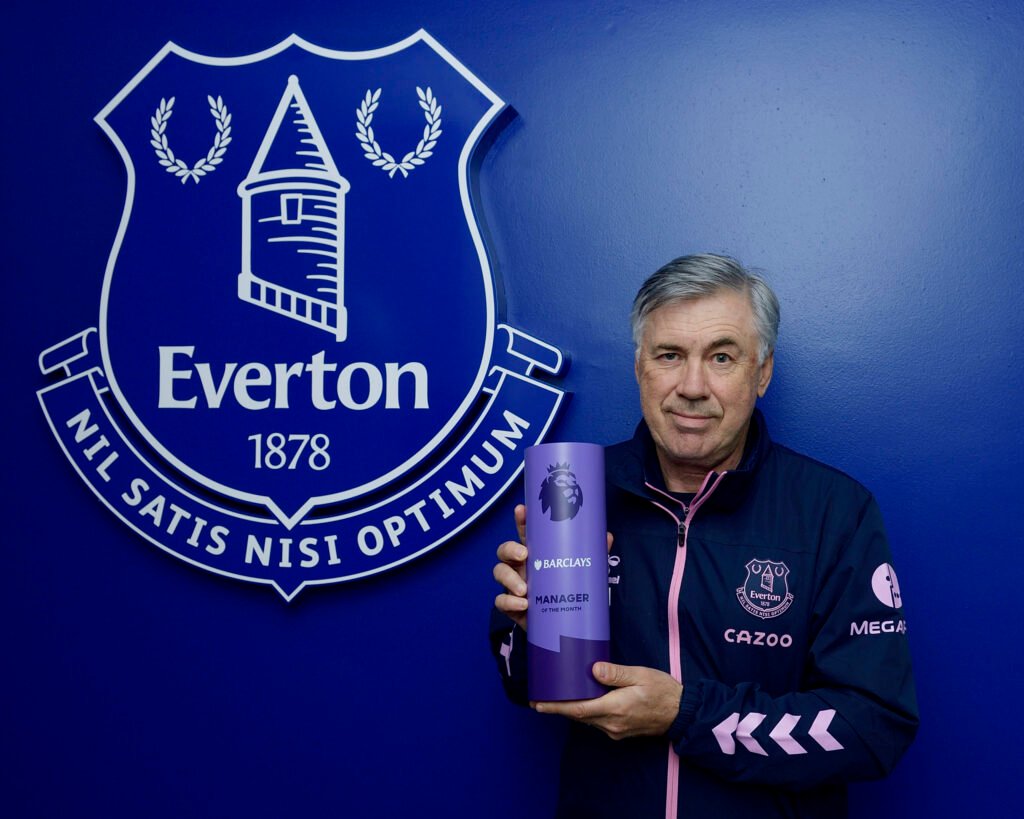
Carlo Ancelotti (December 2019 – June 2021) was hired on December 21, 2019. In one of their most ambitious appointments, Everton managed to bring the great “Don Carlo” to Merseyside. Under Ancelotti, Everton posted an 8-7-6 record to finish 12th in his first half-season. The 2020/21 campaign saw improvement, with a 17-8-13 record and a 10th-place finish. Everton also reached the quarter-finals of both domestic cups. However, in a significant blow, Ancelotti departed at season’s end to rejoin Real Madrid, halting what many believed was a promising project.
Rafael Benítez (June 2021 – January 2022) was appointed as manager for the 2021/22 season. The appointment of Rafael Benítez was controversial given his Liverpool history. After a strong opening run, Everton’s form collapsed, managing just two league wins over four months. Benítez was dismissed in January 2022 with a 5-4-10 league record. Duncan Ferguson again served briefly as caretaker.
Frank Lampard (January 2022 – January 2023) was hired on January 31, 2022. After a shaky start in which Everton lost 5 of Lampard’s first 6 matches, they would find their form and pick up big wins over Chelsea and Manchester United to avoid relegation. They would go 6-2-10 to close out the 2021/22 season, finishing in 16th position under Lampard. Lampard would return the following year, but Everton was unable to find any form and he was sacked on January 23, 2023. Prior to Lampard’s sacking, Everton had gone 3-6-11 and were sitting in the relegation zone in the 2022/23 Premier League table.
Sean Dyche (January 2023 – January 2025) was hired to replace Frank Lampard on January 30, 2023. Dyche would go 5-6-7 over the remainder of the season, narrowly avoiding relegation.
Everton would get off to a slow start the following year, winning only 1 of their first 6 matches. Over the next 2 months, they would win 4 games and draw 1 but were hit with a 10-point deduction, later reduced to 6 points on appeal. After their first league win in nearly 4 months, Everton were deducted another 2 points. Despite this adversary, Everton would win 4 of their final 7 matches of the season to comfortably avoid relegation. Everton would finish the season with a record of 13-9-16.
Everton failed to transfer their late season form to the 2024/25 season as Everton lost their first 4 matches of the season. Dyches was dismissed from the club on January 9, 2025. Everton had a record of 3-8-8 and sat in 16th position at the time of his dismissal. Club legends Leighton Baines and Séamus Coleman oversaw the club as caretakers for one match.
David Moyes Returns to Everton
David Moyes (January 2025 – present), who was manager from 2002 until 2013, has been in charge of Everton since January 11, 2025. He finished the 2024/25 season with 8 wins, 7 draws, and just 4 losses to end the season in 13th position.
A Decade of Big Names
From Champions League-winning managers like Carlo Ancelotti to established Premier League figures such as Rafael Benítez and Sam Allardyce, Everton have repeatedly turned to experienced, high-profile names in an effort to re-establish themselves. Yet despite those ambitious appointments, sustained progress has remained elusive.
What was once one of the league’s most stable institutions has instead become one of its most turbulent – a stark contrast to the Moyes-led consistency that preceded this era.
4.Chelsea (12 managers since 2016)
Manager Timeline
- Antonio Conte (July 2016 – July 2018)
- Maurizio Sarri (July 2018 – June 2019)
- Frank Lampard (July 2019 – January 2021)
- Thomas Tuchel (January 2021 – September 2022)
- Graham Potter (September 2022 – April 2023)
- *Bruno Saltor (April 2023)
- *Frank Lampard (April 2023 – June 2023)
- Mauricio Pochettino (July 2023 – May 2024)
- Enzo Maresca (July 2024 – January 2026)
- *Calum McFarlane (January 2026)
- Liam Rosenior (January 2026 – present)
Few Premier League clubs have embraced managerial turnover quite like Chelsea. Since 2016, the club has combined silverware with instability, regularly appointing elite-level coaches in pursuit of immediate success.
Antonio Conte: Immediate Title Success
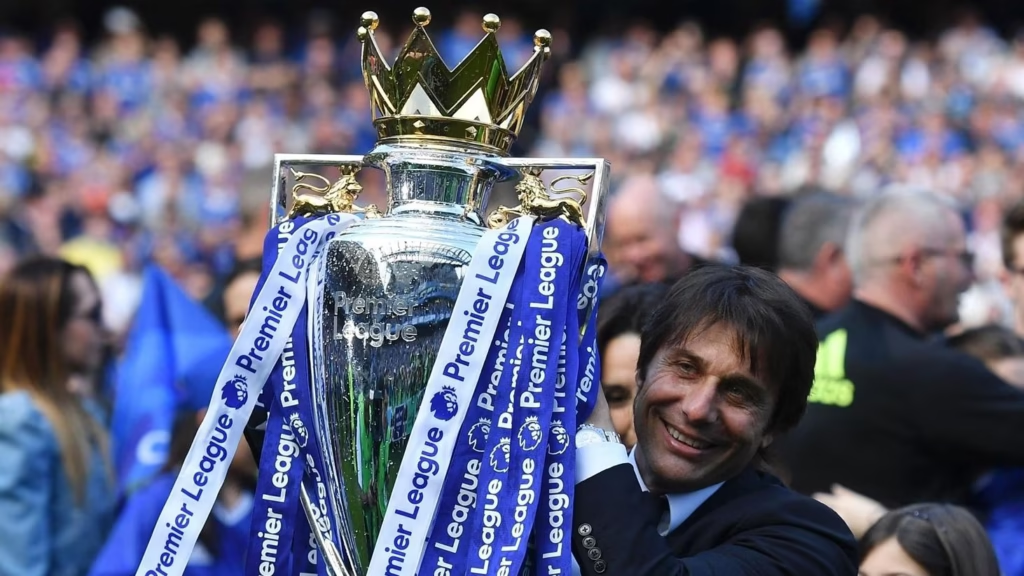
Antonio Conte (July 2016 – July 2018) delivered instant results. After switching to a 3-4-3 system early in the 2016/17 campaign, Chelsea surged to the Premier League title, winning 30 matches and setting a then-record 13 consecutive victories.
Conte followed up with an FA Cup triumph in 2018, though league regression and internal tensions ultimately led to his departure. His tenure remains one of the most decisive short-term managerial impacts in modern English football.
European Silverware to Turbulence
Maurizio Sarri (July 2018 – June 2019) took over as manager on July 14, 2018 ahead of the 2018-19 season. During his only season in charge, Sarri led Chelsea to a record of 21-9-8, which was good enough for a 3rd place finish in the Premier League and Champions League qualification. Chelsea would also reach the finals of the EFL Cup, losing on penalties to Manchester City.
In the UEFA Europa League, Chelsea would defeat Arsenal in the final for their second Europa League title in club history. Sarri left Chelsea at the end of the season.
Chelsea club legend Frank Lampard (July 2019 – January 2021; April 2023 – June 2023) was hired on July 4, 2019. Lampard took charge during a transfer ban and leaned heavily on academy talent. His first season yielded a top-four finish and accelerated the development of several young players.
Defensive inconsistency and poor form led to his dismissal midway through the following season. Lampard later returned briefly as caretaker in 2023 during a transitional phase, though results proved difficult to stabilize.
Champion’s League Triumph
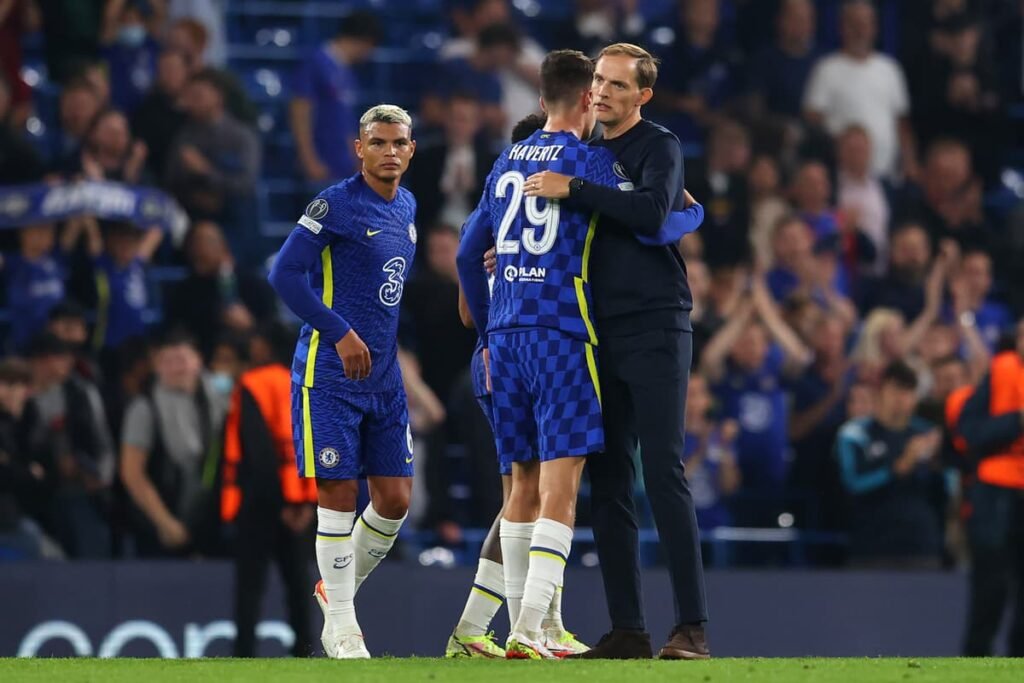
Thomas Tuchel (January 2021 – September 2022) was hired on January 26, 2021. Although Chelsea were sitting in 9th place upon his hiring, Tuchel would lose only 3 league matches the rest of the season – winning 11 and drawing 5 over this stretch. Chelsea would finish in 4th place, qualifying for the UEFA Champion’s League for the third consecutive year. That season in the UEFA Champion’s League, Chelsea would go on to defeat Pep Guardiola’s Manchester City in the Champion’s League final for their 2nd title.
Tuchel would remain in charge for the 2021/22 season, finishing in 3rd place with a record of 21-11-6. In February, Tuchel would lead Chelsea to their first FIFA Club World Cup trophy.
Tuchel would begin the following season as Chelsea manager but was dismissed on September 7, 2022, after a slow start to the season. Tuchel departed Chelsea with the 4th-highest win rate among managers who oversaw at least 100 matches.
Long-Term Vision, Short-Term Struggles
Graham Potter (September 2022 – April 2023) was appointed on September 8, 2022, and began brightly, winning three and drawing two of his first five league matches, but form quickly deteriorated. He secured just four additional league victories before being dismissed on April 2, 2023, exiting with a 7-7-8 league record and early domestic cup eliminations; Bruno Saltor briefly took charge for one drawn match.
Frank Lampard returned as caretaker on April 6 but won only one of the club’s final nine league fixtures, as Chelsea finished 12th and were eliminated from the Champions League quarter-finals by Real Madrid.
Mauricio Pochettino (July 2023 – May 2024) was hired that summer and guided Chelsea to a 18-9-11 record and sixth-place finish, qualifying for the Conference League playoff round, while reaching the FA Cup semi-finals and EFL Cup final. Despite the relative improvement, he was dismissed just two days after the season concluded.
Champions of the World
Enzo Maresca (July 2024 – January 2026) was hired on July 1, 2024. During his first season in charge, Chelsea would finish with a league record of 20-9-9 which saw the Blues finish 4th place in the Premier League table and Champions League qualification.
In Chelsea’s first ever participating season in the UEFA Conference League, they would reach the finals, defeating Real Betis 4-1 to see themselves lift the trophy.
In July 2025, Maresca would lead Chelsea to their 2nd FIFA Club World Cup title in 4 years and notably saw the Blues become the inaugural winners of the competition under its new formatting. Chelsea defeated reigning UEFA Champions League winners Paris Saint-Germain 3-0 in the final.
Maresca would resume his duties for the following season, going 8-6-5 before the new year. Maresca would step down from his position on January 1, 2026, due to tensions with the club’s ownership and board executives.
A New Man in Charge Again
Liam Rosenior (January 2026 – present) has been managing Chelsea since January 8, 2026. Rosenior joined Chelsea from fellow Blue Co. ownership club Strasbourg in France.
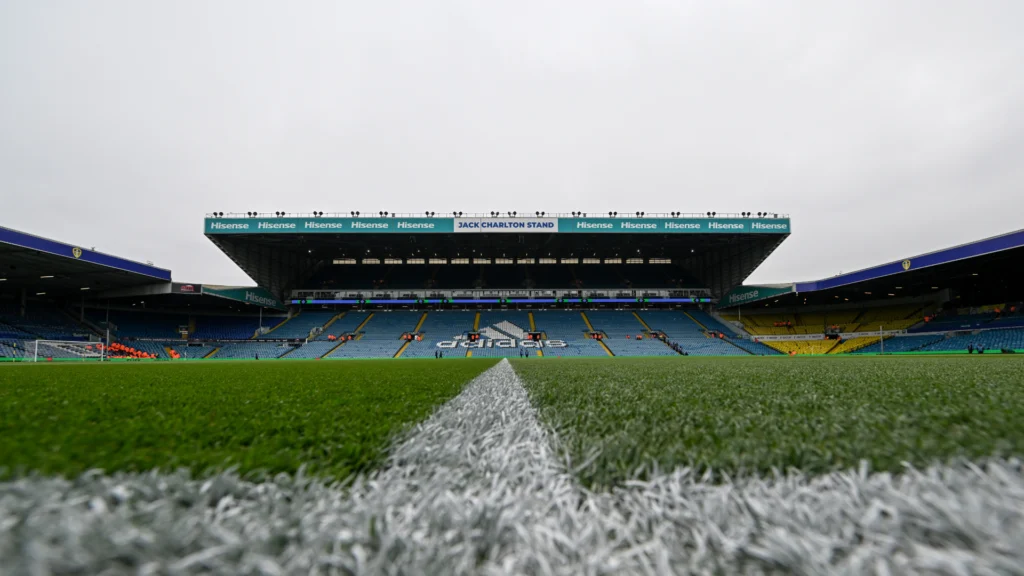
5. Leeds United (10 Managers Since 2016)
Manager Timeline
- Steve Evans (October 2015 – May 2016)
- Garry Monk (June 2016 – May 2017)
- Thomas Christiansen (June 2017 – February 2018)
- Paul Heckingbottom (February 2018 – June 2018)
- Marcelo Bielsa (June 2018 – February 2022)
- Jesse Marsch (February 2022 – February 2023)
- *Michael Skubala (February 2023)
- Javi Garcia (February 2023 – May 2023)
- Sam Allardyce (May 2023 – June 2023)
- Daniel Farke (July 2023 – present)
Leeds United’s managerial changes reflect the club’s volatile decade – spanning Championship rebuilds, Premier League promotion, survival battles, and relegation pressures.
Marcelo Bielsa: Promotion Architect and Cultural Reset
Marcelo Bielsa (June 2018 – February 2022) was hired on June 15, 2018. Marcelo Bielsa fundamentally reshaped Leeds United. His intense pressing, man-marking defensive schemes, and relentless training standards transformed both performances and expectations.
In 2019/20, Bielsa delivered the Championship title and secured promotion after a 16-year Premier League absence. Leeds followed with a fearless ninth-place finish in 2020/21. However, mounting injuries and heavy defeats in 2021/22 led to his dismissal. Despite the difficult end, Bielsa’s influence on the club’s identity remains enduring.
From America to England
Leeds would hire American manager Jesse Marsch (February 2022 – February 2023) on February 28, 2022. Leeds would finish on 38 points and avoid relegation in 17th place following Marsch’s appointment.
With 2 wins and a draw in the first 3 matches of the 2022/23 season, Leeds sat in 3rd place in the Premier League. That would be their highest position as Leeds would manage just 2 wins in their next 16 matches before Marsch was dismissed. At the time of his dismissal, Leeds sat in 14th position. Michael Skubala would take over for 3 matches as caretaker, a draw and 2 losses.
Relegation to the Second-Tier
Javi Garcia (February 2023 – May 2023) was hired as Leeds’ manager on February 21, 2023. Garcia would see initial success winning 2 of his first 4 matches in charge. In April of 2023, Garcia’s Leeds would lose their form and manage only a single victory against 5 defeats and a draw. Garcia was sacked on May 3, 2023, with 4 games remaining in the season and Leeds sitting in 17th position.
Sam Allardyce (May 2023 – June 2023) managed the final 4 matches of the season – a draw and 3 defeats. Leeds would end the season in 19th position and were relegated to the Championship.
Daniel Farke and Leeds United’s Return to the Premier League
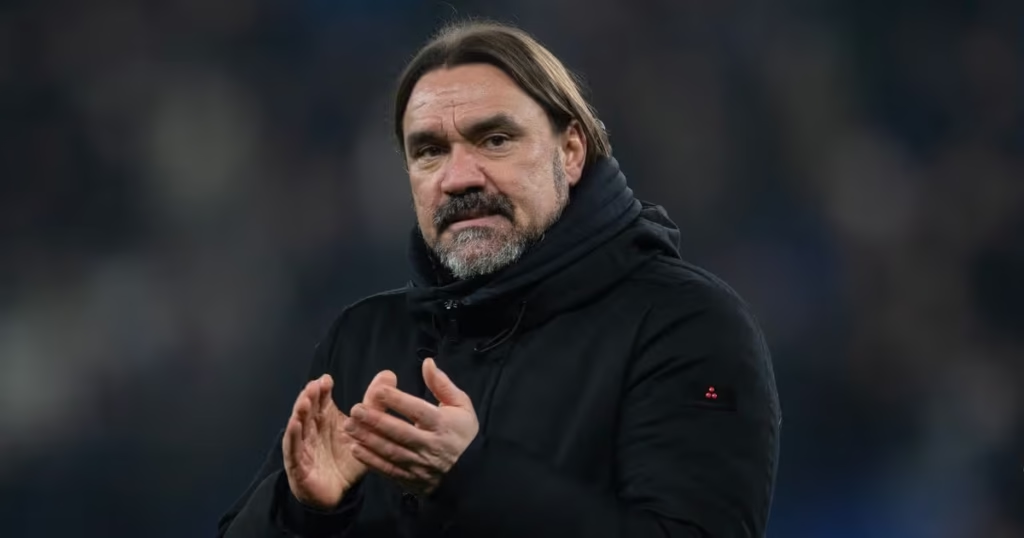
Leeds United’s current manager, Daniel Farke (July 2023 – present), was hired on July 4, 2023.
Leeds would have a strong season in their return to the Championship and sat in an automatic promotion position with 6 games remaining. In those 6 matches, Leeds would only win one match and fall to 3rd position with a record of 27-9-10 and out of the automatic promotion places. A 1-0 loss to Southampton in the promotion playoff meant Leeds would remain in the Championship for another year.
Farke would return for the 2024/25 season. With only 4 losses on the season, Leeds would go on to win the EFL Championship and earn automatic promotion to the Premier League. Their final record for the 2024/25 Championship campaign was 29-13-4.
Daniel Farke is currently in charge of Leeds United in the English Premier League.
References: