Nineteen miles of the M27 separate Southampton and Portsmouth.
That’s close enough that neither city can pretend the other doesn’t exist. It’s far enough that each has grown up with its own distinct identity. That tension — between proximity and difference — is the whole engine of this rivalry. It was there before either football club existed, and it’s still there now.
Southampton vs Portsmouth Head-to-Head History
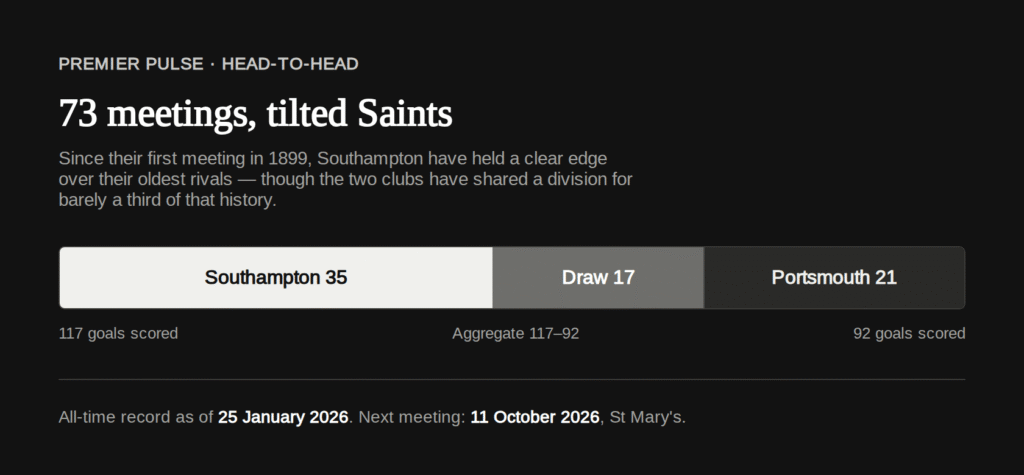
Southampton hold a clear historical edge: 35 wins to Portsmouth’s 21, with 17 draws, and a 117–92 lead on goals across 73 competitive meetings since 1899. Given how evenly matched the two cities feel culturally, it’s a less even contest on the pitch than the rivalry’s intensity suggests.
Southampton vs Portsmouth Head-to-Head Records
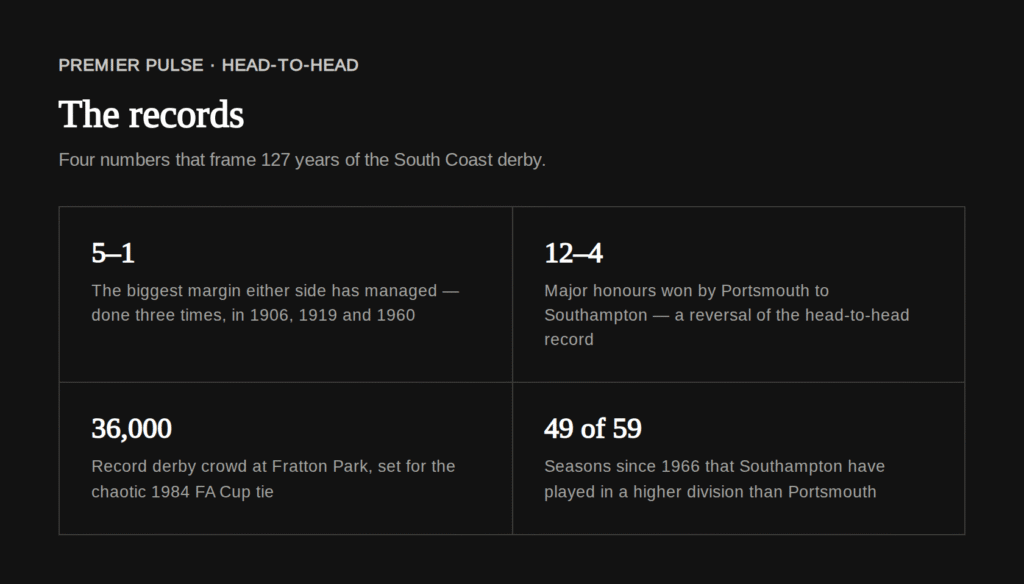
The biggest win either side has recorded is 5–1, achieved three separate times — Southampton in the 1906 FA Cup and again in 1960, Portsmouth in 1919. Despite trailing in the head-to-head, Portsmouth hold the edge in honours, 12 major trophies to Southampton’s 4, largely on the back of their back-to-back league titles either side of 1950 and two FA Cups. The record crowd for the derby, 36,000, came for the 1984 FA Cup tie. And since Southampton’s first promotion to the old First Division in 1966, they’ve played in a higher division than Portsmouth in 49 of the following 59 seasons — the structural gap behind why, for such fierce neighbours, they’ve actually played each other so rarely.
Two Ports, Two Characters
The simplest version of the story is also the truest one: Portsmouth is a naval city, Southampton a commercial one.
Portsmouth has been home to the Royal Navy’s main base on the English Channel for centuries. HMNB Portsmouth still anchors the city’s identity and gives Portsmouth FC its “Pompey” nickname, used by sailors and civilians alike. Southampton’s port, by contrast, grew around merchant shipping and passenger liners — most famously as Titanic’s departure point in 1912.
Portsmouth carries a second layer of distinctiveness that Southampton doesn’t share. The city sits almost entirely on Portsea Island, cut off from the Hampshire mainland by Portsmouth Harbour and a tidal creek. Portsmouth remains the only English professional football club not located on the British mainland.
That physical separateness feeds a real sense, still voiced by Portsmouth supporters today, that their city stands apart from the rest of Hampshire — a close-knit, slightly embattled island identity that Southampton, sprawled openly along its own water, has never needed to develop.
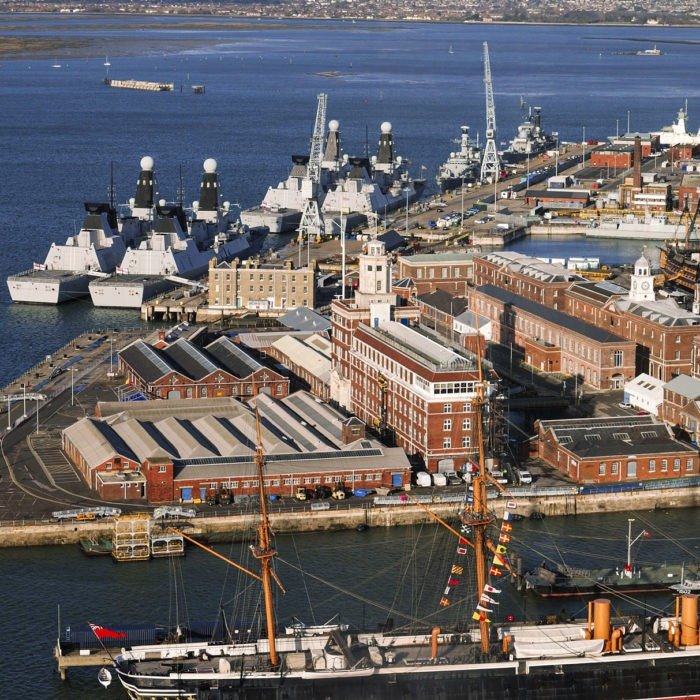
Portsmouth Port
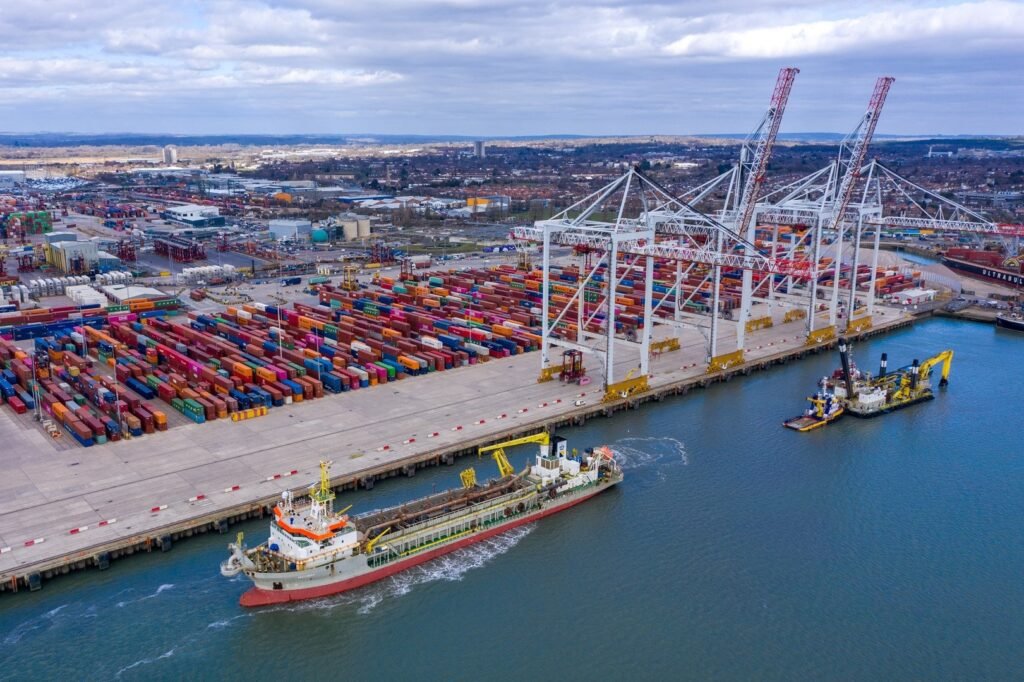
Southampton Port
The Docks Were Fighting Before the Football Was
What’s often missed is that this rivalry has a documented economic prehistory stretching back to 1890 — five years before either club existed in its modern form.
In September 1890, Southampton’s dockers went on strike, demanding the “dockers’ tanner,” a standard union wage rate London dockers had already won the year before. The strike turned violent. Soldiers of the West Yorkshire Regiment were brought in, and the Mayor read the Riot Act.
According to the Portsmouth News’s own look back at this history, blacklegs from Portsmouth were attacked as they arrived at Southampton’s railway station — meaning Portsmouth men were the strikebreakers in this instance, travelling to take Southampton dockers’ jobs. The strike collapsed after London union leadership refused to fund it.
The pattern then reversed. During a Portsmouth dock dispute in the 1930s, it was the “Southampton Company of Union Men” who crossed to break it — the same direction of strikebreaking the folk memory of this rivalry usually points to. The underlying friction was structural, not personal: Southampton’s docks operated under national union agreements, while Portsmouth’s were independently run and non-unionised, meaning Portsmouth firms could consistently undercut Southampton labour on price.
There’s even a maritime footnote from 1912. When Southampton crew refused to sail Titanic’s sister ship, Olympic, over safety concerns about lifeboat numbers, Portsmouth dockers took their place — reportedly travelling under cover of night to avoid Southampton mobs.
The popular explanation for Southampton’s “Scummers” nickname — that it stems from Southampton workers undercutting a Portsmouth strike — is treated by Portsmouth’s own local paper as more folk myth than settled fact. One Portsmouth FC historian has gone further, arguing the nickname almost certainly has nothing to do with the docks at all, and emerged organically in the 1960s or 70s as football rivalry intensified, rather than from any 19th-century labour dispute. What’s certain either way is that by the time football took over as the two cities’ preferred outlet, there was already a long and genuinely contested history of dockside bitterness to draw on.
The Clubs Are Born
Southampton came first, and came from church.
In 1885, members of St Mary’s Church of England Young Men’s Association formed St Mary’s F.C. The club didn’t become “Southampton F.C.” until 1897, but the St Mary’s name lives on today in St Mary’s Stadium.
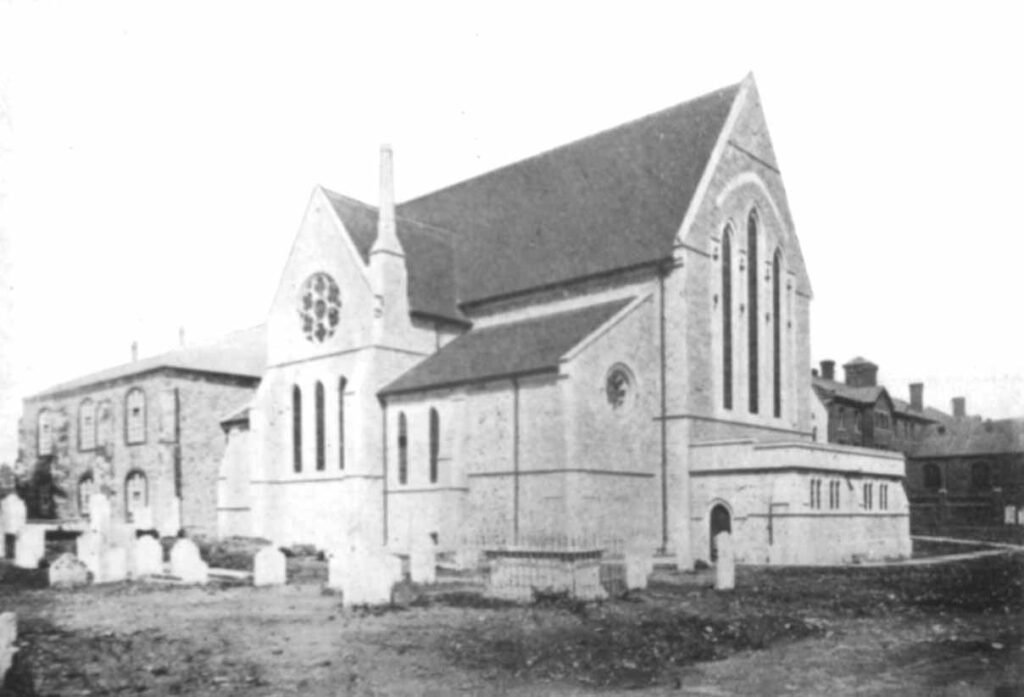
Portsmouth’s formation was more deliberate and commercial. A group of local businessmen founded Portsmouth F.C. in April 1898, specifically intending to bring professional football to the city, and were unusually elected straight into the first division of the Southern League, replacing a disgraced amateur predecessor club.
[IMAGE PORTSMOUTH FOUNDED]
The clubs met for the first time on 6 September 1899, a friendly to open Portsmouth’s new Fratton Park ground. For the record: Portsmouth won it 2–0, with goals from Dan Cunliffe and Harry Clarke — not a Southampton win, whatever you may have read elsewhere.
Their first competitive meeting followed soon after in the Southern League. Across the next twenty years the sides met with startling regularity, often three or four times a season between league fixtures and regional cup competitions — a frequency the rivalry has never recaptured since.
1939 and 1960: From Camaraderie to Rivalry
It’s worth pausing on something that cuts against the modern reputation of this fixture entirely: for its first few decades, it wasn’t really that bitter.
In 1939, Portsmouth won the FA Cup — still, remarkably, the last major trophy the club won before their 2008 FA Cup success decades later. The following week, Portsmouth paraded the trophy around Southampton’s own ground, The Dell. Southampton supporters reportedly showed no animosity at all toward their neighbours’ triumph, and some even turned out to see the cup up close.
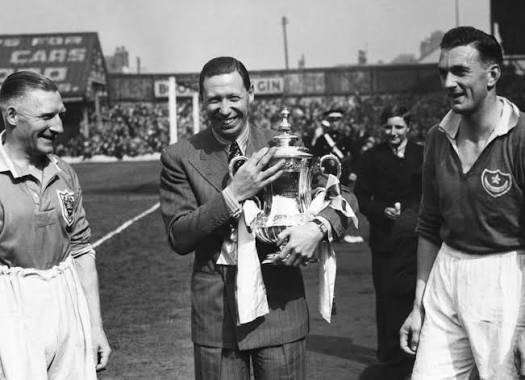
That spirit held for roughly another twenty years. The real shift came through the 1960s, as the two clubs started meeting far more often in the Second Division — eight times across the decade alone, after years of barely crossing paths.
The pivot point was 27 August 1960, when Southampton beat Portsmouth 5–1 at The Dell. It’s a result historians of the fixture now point to as the moment the rivalry’s balance of power began tilting permanently toward Southampton. Portsmouth, champions of England as recently as 1950, found themselves looking up at a club they’d long considered the junior partner on the south coast.
Southampton’s promotion to the First Division in 1966 confirmed it. For the first time, Southampton were playing a level above Portsmouth, and stayed there for most of the following decade. Among Portsmouth supporters, something that had been good-natured rivalry started curdling into something sharper — jealousy, frustration, and, by the back end of the 1960s, the beginnings of real hostility between the two sets of fans.
1976: Two Gut-Punches in a Month
No single month defines this rivalry’s emotional lopsidedness better than April–May 1976.
On 6 April 1976, Southampton visited Fratton Park in the Second Division with Portsmouth fighting relegation. Mick Channon scored a late goal to win it 1–0 for Southampton — a result that effectively condemned Portsmouth to the drop into the third tier. It remains, to this day, Southampton’s last league win at Fratton Park.
Three and a half weeks later, on 1 May 1976, Southampton — a Second Division side at the time — beat Manchester United 1–0 in the FA Cup final, one of the biggest upsets in the competition’s history. The winning goal came from Bobby Stokes.
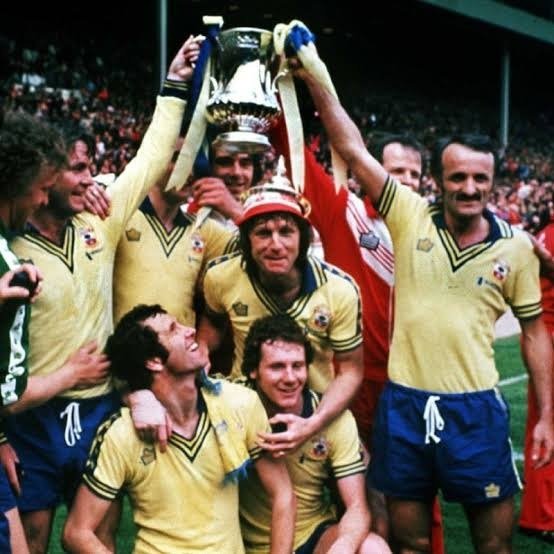
Here’s the detail that makes it sting even harder for Portsmouth fans: Stokes was born in Portsmouth and supported Portsmouth as a boy, even playing briefly for the club, before his career took off at Southampton. A Portsmouth-born player delivered Southampton’s only major trophy in over a century, in the same month Portsmouth had been relegated by a last-gasp Southampton goal.
Stokes’s own later life was a sad coda to the story. His career petered out within a year of the final, and he died in 1995, aged 44, in difficult circumstances, shortly before a planned testimonial match.
The Firms
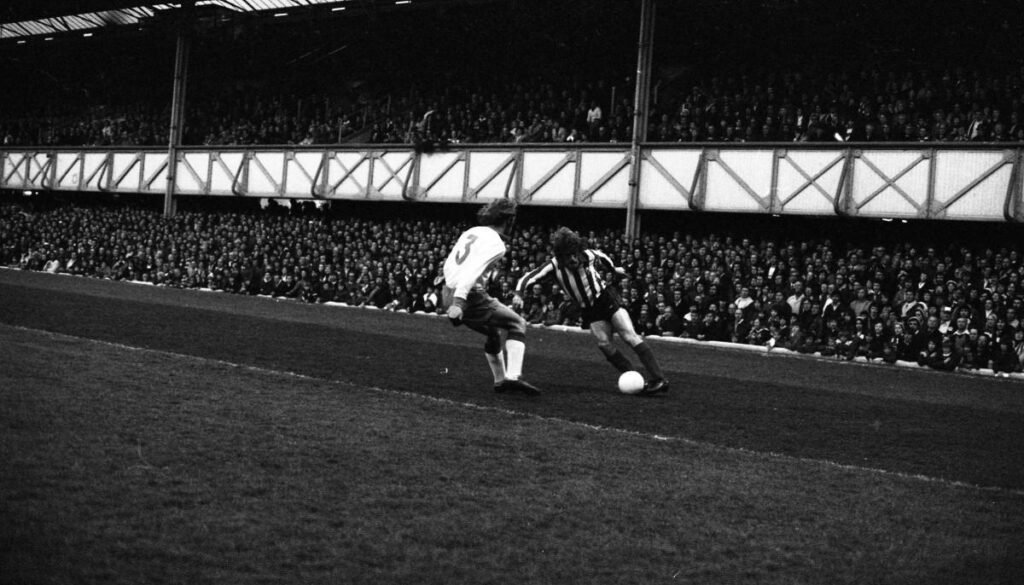
Hooliganism attached itself to this fixture the same way it did across English football in the 1970s and 80s, and it’s still part of its reputation today.
Portsmouth’s firm, the 6.57 Crew, is among the most written-about in the country — three separate books have been published on them. The name comes from the 6:57am train out of Portsmouth and Southsea station to London Waterloo, which members caught to reach away games.
Southampton’s own firms never achieved quite the same notoriety or book deals, but are recorded under several names, including the Uglies, Inside Crew, and Scum Army — the last of which maps neatly onto the “Scummers” nickname itself.
“Skates” for Portsmouth supporters has its own documented origin. It came from a 1988 reader poll in Southampton fanzine The Ugly Inside, which asked readers to suggest the most offensive term they could aim at Portsmouth fans.
For the fuller story of English football’s hooligan era and how it shaped another South Coast-adjacent rivalry, see our piece on Millwall’s hooliganism history: rise, fall and reckoning.
1984: Fratton Park Erupts
The two clubs were in different divisions through most of the late 1970s and early 80s, meeting only when the cups threw them together.
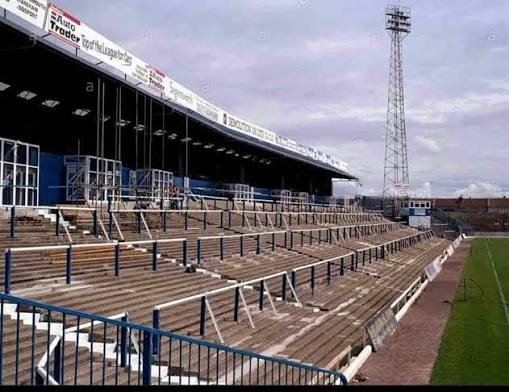
On 28 January 1984, they did — an FA Cup fourth-round tie at Fratton Park, the clubs’ first FA Cup meeting there in generations, in front of a crammed 36,000 crowd, still the modern-day attendance record for the fixture at that ground.
The match itself was tense and goalless until late on; Southampton held on for a 1–0 win. The atmosphere before that had already turned ugly. Portsmouth fans racially abused Southampton’s Black players, Danny Wallace and Reuben Agboola, hurling bananas throughout the game, along with coins — one of which struck home hard enough that local reporting described it as “the coin that could be heard across Hampshire.”
The Portsmouth News itself dubbed the aftermath the “Battle of Fratton.” Eighteen fans were hospitalised, with roughly £8,000 in damage reported directly around the ground, and the final city-wide damage bill — smashed shop windows, wrecked police vehicles, trashed pubs — reported as high as £20,000. Fifty-nine people were arrested.
1987: The Long-Awaited Return
Southampton’s promotion from the Second Division in 1978 and Portsmouth’s own relegation that same year meant the sides didn’t meet in the league again for eleven years.
When they finally did, on 22 August 1987 at Fratton Park, over 20,000 fans packed in for a game that ended 2–2. By most firsthand accounts from the period, including those collected in the 6.57 Crew’s own published histories, the build-up and aftermath produced some of the worst disorder the fixture had seen, with reports of several hundred people involved in confrontations around the ground and close to a hundred arrests.
Exact contemporary police figures for that specific day are harder to pin down than for the more thoroughly documented 1984 and 2004 incidents. But the characterisation — an eleven-year grudge finally let off its leash — is consistent across every account of the day.
2004: Youngest Hooligans in Britain
If 1987 is murky on detail, 21 March 2004 is not — it’s one of the most thoroughly documented incidents in English football’s hooligan archive, with its own BBC report.
Portsmouth, newly promoted to the Premier League, beat Southampton 1–0 at Fratton Park through a Yakubu goal. Afterwards, more than 400 police officers were overwhelmed as Portsmouth fans clashed with them outside the ground, hurling coins and missiles, looting shops, and wrecking cars.
Initial same-day arrests numbered in single figures, but as Hampshire Police worked through CCTV footage in the following weeks, the total climbed to 94 arrests. Two of those arrested became genuine, grim footnotes in British football history: a 14-year-old girl became the youngest female ever banned from attending football matches in the UK, and a 10-year-old boy — convicted of violent disorder — became the youngest person ever convicted of football hooliganism in the country.
That season, Portsmouth recorded 146 football-related arrests, the most of any English club. That August, club chairman Milan Mandarić banned 54 Portsmouth supporters for life from Fratton Park over their part in the riot.
The same year delivered a different kind of betrayal. Harry Redknapp — “Mr Portsmouth,” who had guided the club to promotion to the Premier League in 2003 — fell out with Mandarić and resigned in November 2004. Weeks later, he was appointed manager of Southampton.
Portsmouth director Terry Brady called it “the highest betrayal possible.” Redknapp’s spell at Southampton didn’t go well — he couldn’t prevent their relegation the following season — and by December 2005 he was back at Portsmouth, where he’d go on to win the club’s first major trophy in over fifty years, the 2008 FA Cup.
Falling Apart
Portsmouth’s story after 2008 turned into one of English football’s steepest collapses. Financial mismanagement sent the club through multiple rounds of administration, relegation after relegation, and by 2013 they’d fallen all the way to League One — a club that had been champions of England twice in the 1940s and 50s, and FA Cup winners as recently as 2008, playing fourth-tier football.
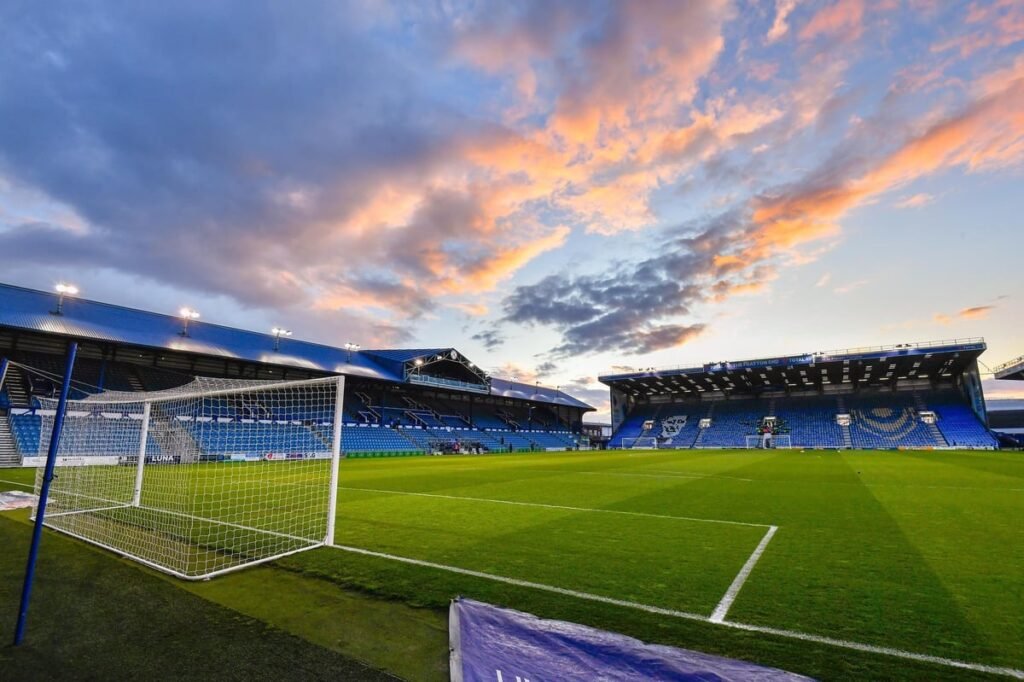
Southampton, by contrast, climbed back from their own relegation to League One in the same period and re-established themselves in the Premier League, widening the gap between the clubs to its largest point in the rivalry’s history.
For long stretches of the 2010s, the derby simply didn’t happen. The sides met only once between April 2012 and 2025 — a Southampton win in the EFL Cup in September 2019 — with a league meeting absent from the calendar for thirteen straight years.
The Rivalry Returns
Southampton’s own relegation from the Premier League at the end of 2024–25 brought the clubs back into the same division for 2025–26 — their first league meetings since April 2012.
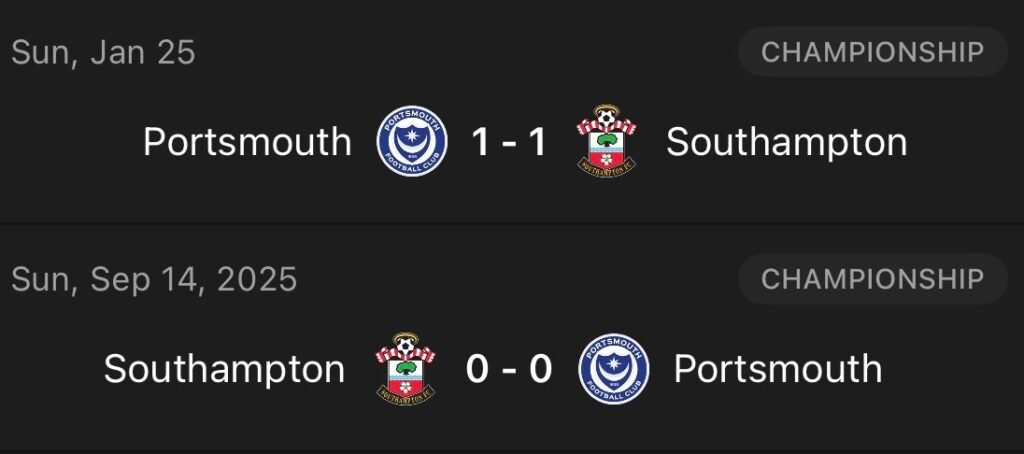
The first fixture, at St Mary’s on 14 September 2025, drew 30,889 fans and a live Sky Sports audience for what turned out to be a tense, cagey goalless draw. Andre Dozzell came closest for Portsmouth, striking the crossbar early on. It was, by most reports, an anticlimactic occasion given the history behind it — the derby’s intensity showing up more in the atmosphere than the football.
Southampton’s season took a rocky path after that. Manager Will Still, only appointed that May, was sacked in early November with the club sitting 21st in the table. His replacement, Tonda Eckert, steadied the ship considerably, eventually guiding Southampton to a 4th-place finish in the Championship that season — a dramatic turnaround from where things stood at the managerial change.
The return fixture, at Fratton Park on 25 January 2026, finished 1–1. On the pitch it was a fair result between two well-matched sides. Off it, the match will be remembered for the disorder covered above — the exploding pyrotechnic, the thrown crutch, and the twelve convictions and 39 years of combined banning orders that followed.
Both clubs stayed in the Championship for 2026–27, setting up a third meeting on 11 October 2026 at St Mary’s. Heading into it, Portsmouth — still managed by John Mousinho — have sat uncomfortably close to the relegation zone for periods of the campaign, while Southampton have had their own stop-start form under Eckert. Whatever else defines this version of the rivalry, both clubs seem destined to keep meeting each other with something real at stake, rather than as the occasional, decade-apart novelty the 2010s made it.
Not Just Violence
It’s worth being honest about scale here, same as with any fixture like this: the overwhelming majority of Saints and Pompey supporters have never been near any of the incidents above, and the modern derby is planned around “bubble” segregation, dispersal orders, and hundreds of officers precisely because the risk, while real, involves a genuinely small number of people on both sides.
The January 2026 fixture, disorder aside, also featured the two clubs’ women’s teams playing their own increasingly well-attended version of the derby at St Mary’s that season. It’s a reminder that this rivalry isn’t a single story, even if the ugliest chapters get the most attention.
Related Premier Pulse Reading
Sources & References
Geography, identity and the docks
- Portsmouth News, “Portsmouth v Southampton: Everything you need to know”
- Portsmouth News, “Great Pompey Myths Debunked – No 1: The Origin of Scummers”
- Portsmouth News, “Portsmouth expert explains history behind Southampton ‘scummers’ insult”
- See Southampton Heritage Guides, “Dock Strike of 1890”
- iwalkalone.co.uk, “Two foreigners in a historic dockyard”
Club origins and early meetings
1939–1960
- FourFourTwo, “Why Portsmouth vs Southampton is more than a game”
- Sportstoriez, “Portsmouth & Southampton: The South Coast Derby Explained”
1976
The firms and nicknames
1984 and 1987
2004
- BBC CBBC News, “10-year-old is youngest hooligan”
- ESPN, “Soccer-Police clash with fans after Portsmouth derby match”
The modern era
- Sky Sports, “Southampton 0-0 Portsmouth: First league south coast derby since 2012”
- ESPN, “Portsmouth fans banned posing as stewards to enter derby”
- BBC Hampshire & Isle of Wight via AOL, “Ball boy hurt by ‘exploding device'”
- Portsmouth News, “Disgraceful Pompey and Saints fans named, shamed and banned”