The Merseyside Derby — Liverpool vs. Everton — is one of the oldest and most storied rivalries in English football. Rooted not just in geography but in politics, religion, and the fierce identity of a city that has always done things its own way, the fixture has been contested at least twice a season since 1962–63, with both clubs maintaining near-unbroken residency in the top flight across that span. Across 247 meetings, the Merseyside Derby has produced tragedy, triumph, and some of the most unforgettable moments in Premier League and English football history.
Liverpool vs Everton Head-To-Head Record
Liverpool: 102 Wins
Draws: 78
Everton: 68 Wins
Liverpool vs Everton Statistics
| Stat | Detail |
| Total meetings | 248 |
| Largest victory | Liverpool 6–0 Everton 1935 |
| Longest winless run | 23 consecutive games (Everton, 2011–2020) |
| Record attendance | 78,299 Goodison Park, 18 Sep 1948 |
| Derby origin | 1894 — oldest top-flight derby in England |
| First result | Everton 3–0 Liverpool |
Merseyside Derby Origins: How Liverpool and Everton’s Rivalry Began
The roots of the Merseyside Derby stretch back to 1894, making it the oldest derby in England’s top flight — but its true origin story begins a decade earlier.
Everton Football Club, founded in 1878, played their home matches at Anfield from 1884. The ground was owned by club chairman John Houlding, a Conservative Party member whose political views put him increasingly at odds with several of Everton’s board members, who held liberal sympathies. The tensions came to a head in 1892 when Everton departed Anfield for Goodison Park — located just across Stanley Park. Houlding’s response was to form a new club to fill the vacant ground: Liverpool Football Club. Two years later, the two sides met for the first time, a 3–0 victory for Everton.
The divide between the clubs was never purely political. Liverpool has historically had a larger Irish population than any other English city, and the fault lines of Irish unionism and nationalism — closely mirroring the Protestant-Catholic divide — mapped loosely onto the two clubs. Houlding was a staunch unionist, while Everton’s new leadership sympathised with Irish independence. Yet for all the historical explanations, no single narrative fully accounts for the rivalry. Many Merseyside families have always had supporters on both sides.
Greatest Merseyside Derby Matches in History
The 1986 FA Cup Final brought the two clubs together at Wembley in a genuinely historic occasion. Liverpool had already won the First Division title the week prior; defeating Everton 3–1, having trailed at half-time, handed them their first and only League and FA Cup double. Everton finished runners-up in both competitions.
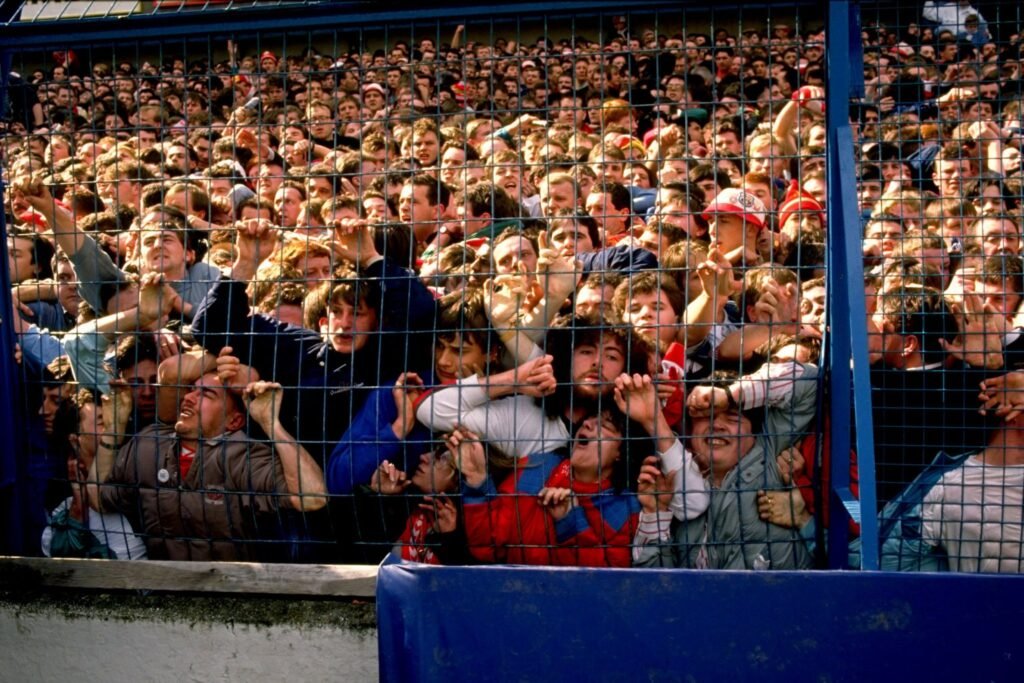
The 1989 FA Cup Final was played under the heaviest of shadows. Just weeks earlier, 97 Liverpool supporters had lost their lives during their FA Cup semi-final against Nottingham Forest at Hillsborough Stadium. A catastrophic failure of crowd management led to a fatal crush in the Liverpool end, with over 700 further injuries recorded — the deadliest disaster in British sporting history. The final itself saw Liverpool come from behind to beat Everton 3–2 after extra time, but the result was secondary to what preceded it.
The 1991 FA Cup Fifth Round produced one of the most chaotic derby encounters on record. After a goalless draw at Anfield, the replay at Goodison ended 4–4, with another replay required. Everton won it 1–0. What made the sequence truly remarkable, however, was what followed: two days after the 4–4 draw, Kenny Dalglish resigned as Liverpool manager. Citing the toll the job had taken on him — compounded by the tragedies at Heysel in 1985 and Hillsborough in 1989 — Dalglish stepped down. Everton hold the quirky distinction of being the club whose match pushed one of Liverpool’s greatest figures out of the door.
April 2001 brought one of the most dramatic endings in derby history. Liverpool, locked in a tight race for Champions League qualification having just lost to rivals Leeds, visited Goodison in desperate need of a win. They took the lead midway through the second half, only for an Everton penalty to level things in the 83rd minute. Then, deep into stoppage time, Gary McAllister curled a free-kick from 44 yards into an unguarded net after catching goalkeeper Paul Gerrard off his line. Liverpool took all three points, then dropped just two in their remaining fixtures to seal a Champions League spot by a single point.
February 2021 marked Everton’s end to the longest winless run in derby history. Having failed to beat Liverpool in 23 consecutive meetings dating back to 2011, Everton arrived at Anfield and held their nerve throughout. A Gylfi Sigurdsson penalty in the 84th minute sealed a 2–0 win — and also handed Liverpool their fourth straight home defeat, a run unseen at Anfield in nearly a century.
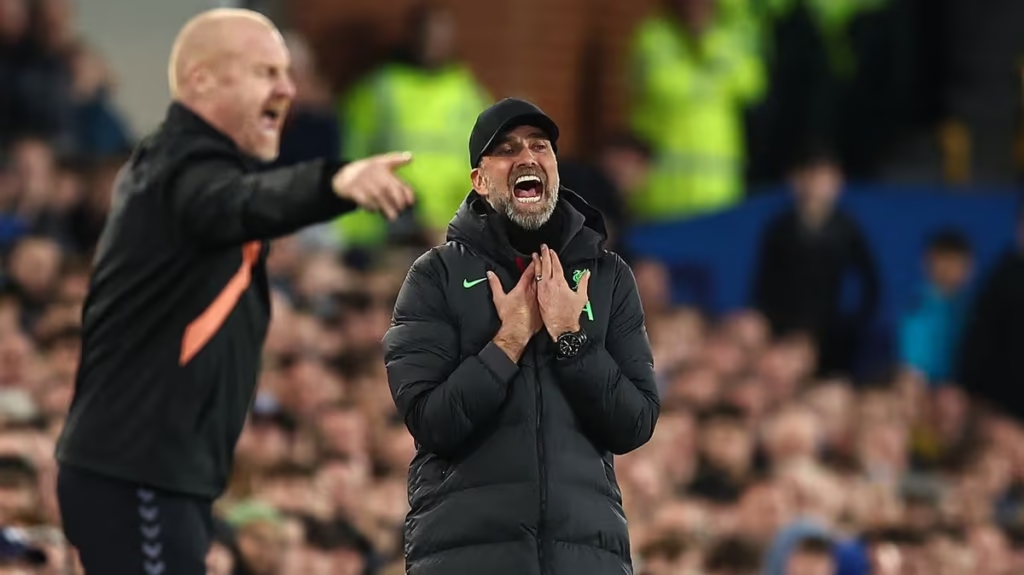
April 2024 saw Everton repeat the scoreline, winning 2–0 again. It proved to be Jürgen Klopp’s final Merseyside Derby as manager. For all his success at Liverpool, Everton fans will savour the fact that he never won a derby at Goodison.
The Merseyside Derby Off the Pitch: Solidarity, Tragedy and the Friendly Derby
For much of its history, the Merseyside Derby has been considered one of English football’s more civil rivalries — the proximity of Anfield and Goodison, and the intermingled nature of local support, earning it the nickname the “friendly derby.” That spirit was tested after the Heysel Stadium disaster in 1985, when a wall collapse before the European Cup Final led to the deaths of 39 Juventus fans and a ban on all English clubs from European competition. Everton, the reigning league champions, were banned through no fault of their own — but the city largely directed its anger at UEFA rather than at each other.
Following Hillsborough in 1989, the two clubs’ supporters stood together against The Sun newspaper, which ran a front page falsely blaming Liverpool fans for the disaster. Everton supporters joined the boycott, which continues to this day on Merseyside. In a striking show of solidarity, a chain of scarves from both clubs was laid across Stanley Park, connecting the two stadiums.
The 2012 Hillsborough Inquest formally absolved Liverpool supporters of any responsibility for the disaster. Before an Everton home match against Newcastle shortly after, Goodison Park held a tribute for the 97 victims.
In a gesture that has become part of derby lore, Liverpool invited the family of an 11-year-old Everton supporter who had died tragically to a Champions League match at Anfield. The family stood on the pitch in Everton shirts as the ground played the Everton anthem, receiving a standing ovation from the home crowd.
Tranmere Rovers: The Third Club
Though the Merseyside Derby officially refers to matches between Everton and Liverpool, fixtures involving Tranmere Rovers — based just across the Mersey — have occasionally been counted within that broader context. Tranmere have never competed in the top flight and have had little regular contact with their neighbours, but the 2001 FA Cup briefly changed that. In the fourth round, Tranmere produced a stunning 3–0 upset over Everton to advance. In the quarter-finals, they faced Liverpool — and this time the magic ran out, with Liverpool winning comfortably 4–2.
The Merseyside Derby Today: Where Does the Rivalry Stand?
After a decade in which Liverpool dominated the fixture, the derby has grown more competitive in recent years — though Everton’s two wins from their last ten meetings still reflects a significant gap. Having lost the opening fixture at Anfield 2–1 this season, Everton will look to level the score on Sunday at Goodison.
If you’re interested in the history of another iconic English football rivalry, check out our deep dive into the Tyne–Wear Derby between Newcastle and Sunderland — a fixture with its own extraordinary cast of characters, controversies, and unforgettable moments.