This is the final matchday before another international break in club football. The Premier League weekend kicks off with an early Saturday fixture between Tottenham and Manchester United, as the Red Devils visit North London. Here’s our full pre-match analysis and breakdown, including team news, player injuries, predicted starting lineups, tactical preview, key stats, and betting tips.

Odds:
| Tottenham | Draw | Manchester United | |
| American | +180 | +260 | +130 |
| Decimal | 2.80 | 3.60 | 2.30 |
| Fractional | 9/5 | 13/5 | 13/10 |
Previous Five Head-to-Head Matches (All Competitions)
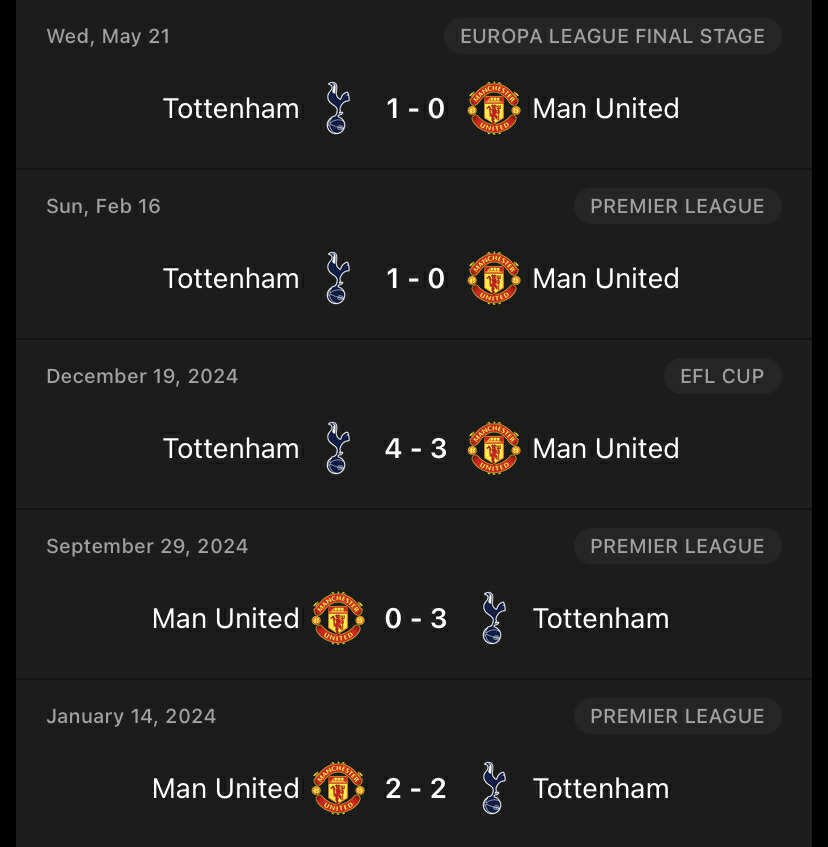
This is a rematch of last season’s UEFA Europa League Final, a match Tottenham won. Over the course of their previous five head-to-head meetings, Tottenham have emerged victorious in four, dominating this fixture in recent history.
Tottenham Team News
Following a 1-0 defeat to Chelsea, in which Tottenham were dominated for much of the match, Spurs bounced back midweek in the UEFA Champions League with a convincing 4-0 win over Copenhagen.
Tottenham’s injury list remains lengthy, with James Maddison, Dejan Kulusevski, Ben Davies, Dominic Solanke, Radu Drăgușin, Yves Bissouma, and Archie Gray all sidelined. Xavi Simons is currently battling a knock but is expected to start against United. Mohammed Kudus missed Tottenham’s Champions League clash with Copenhagen after picking up a training knock. The severity of the injury is still unknown, leaving Kudus questionable for Saturday’s match.
Manchester United Team News
Manchester United’s run of three consecutive wins came to an end last time out when they visited Nottingham Forest, with the hosts managing to take a point in a 2-2 draw at the City Ground.
Unlike Tottenham, United have a relatively short injury list at the moment. The only unavailable player is Lisandro Martínez, who has returned to training with his teammates as he continues his recovery from injury.
Predicted Starting Lineups
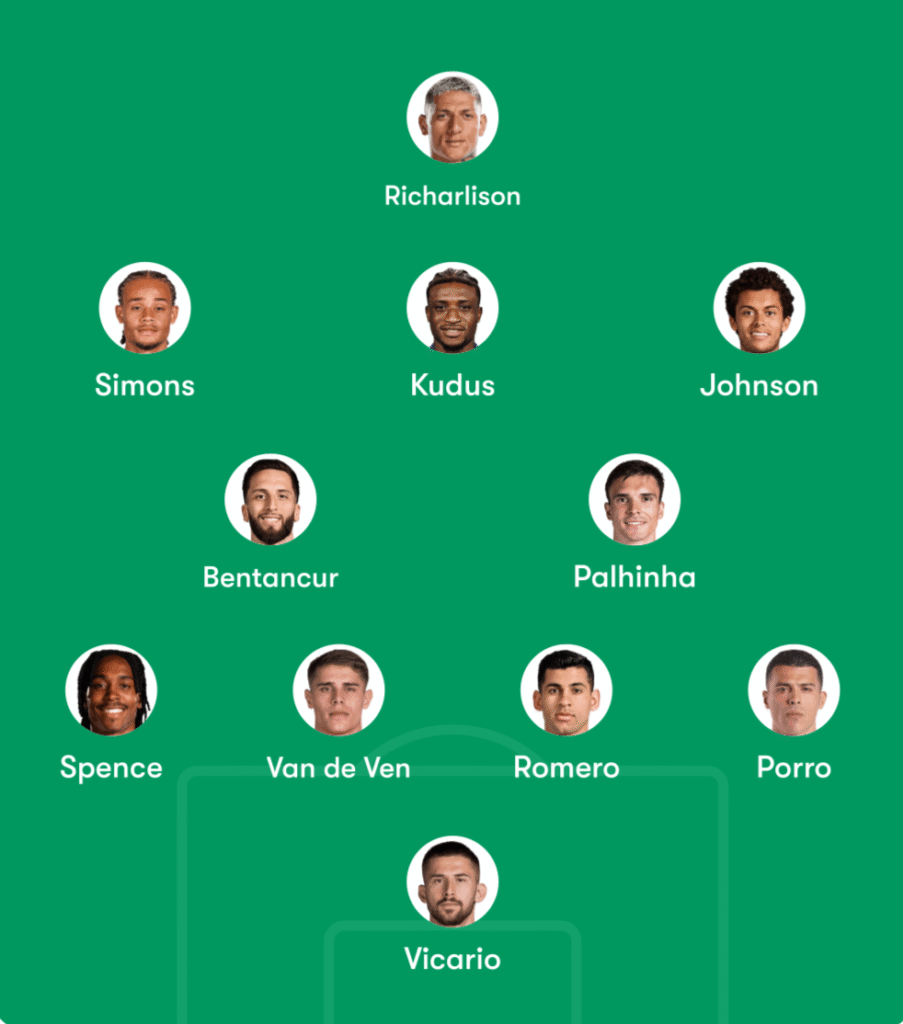
Tottenham Lineup Notes
Kudus’ availability for Saturday remains uncertain; however, reports suggest his knock is minor, and Spurs will hope he’s fit to start. Cristian Romero made his return from injury off the bench last weekend against Chelsea and started midweek versus Copenhagen, so he’s expected to start again here.
Up front, Richarlison may be pushing for a return to the spotlight, with Randal Kolo Muani still struggling to find form since joining Spurs. Kolo Muani has yet to make a major impact in England, and it wouldn’t be surprising if Thomas Frank opts for Richarlison to lead the line in this matchup.
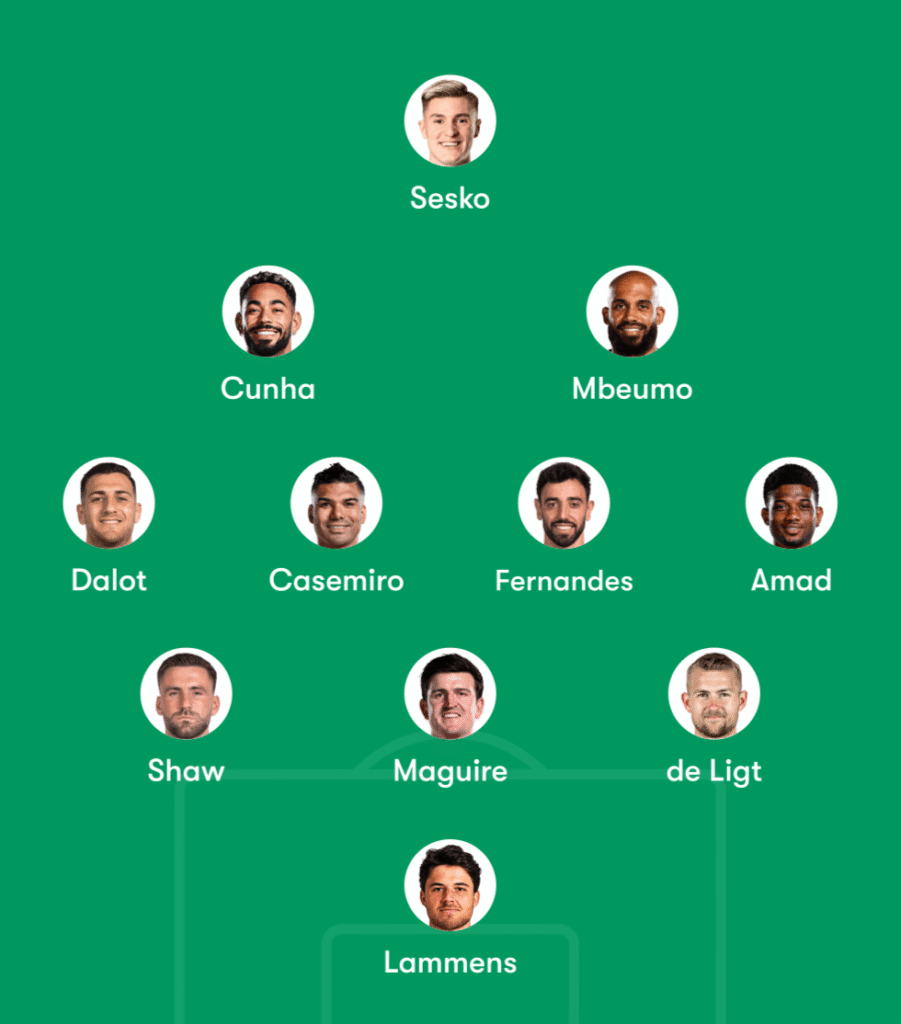
Manchester United Lineup Notes
The only change I foresee in Rúben Amorim’s starting lineup compared to their last outing against Nottingham Forest is Harry Maguire returning to the XI in place of Leny Yoro. This change isn’t a reflection of Yoro’s recent performances but rather a tactical adjustment. United looked vulnerable defending aerial balls against Forest, conceding a headed goal and appearing unsettled by crosses into the box. Maguire’s aerial dominance could be key against Tottenham’s set-piece threat – particularly from Micky van de Ven.
Match Preview
This match is going to be won or lost in the outside lanes of the pitch. What I mean by that is that both of these teams rely heavily on the flanks in their build-up and attacking play, while also struggling to defend those same areas effectively, often allowing their opponents to find success out wide.
Starting with Tottenham, Spurs play in a 4-2-3-1 shape. Their left-back, Spence, pushes high and wide down the left wing in attack, which in turn shifts Xavi Simons into a more central position, where he operates as one of two no. 10 roles that Tottenham deploy. [See image below]
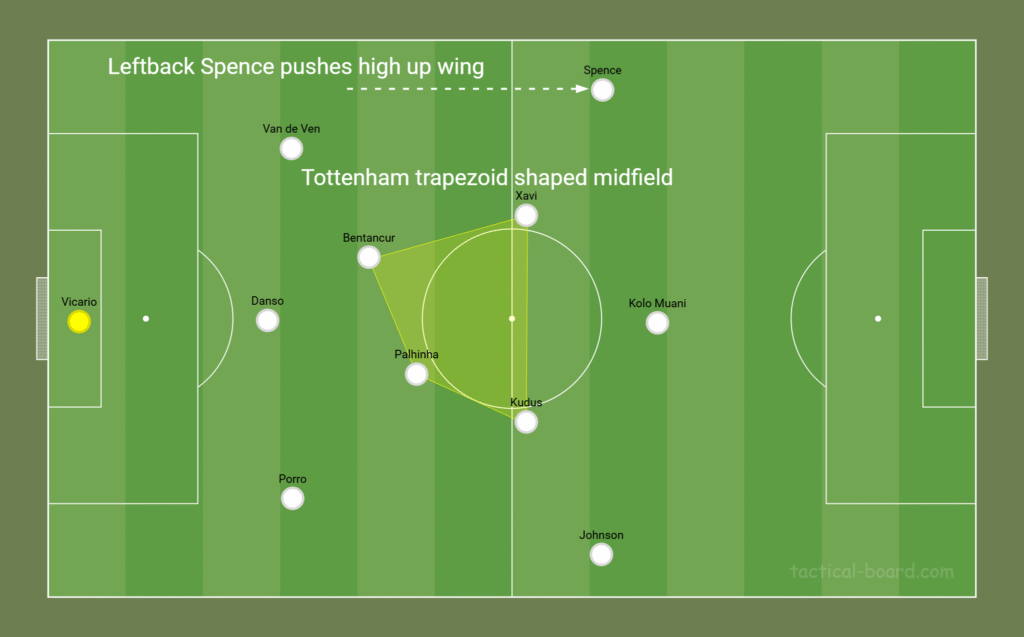
Tottenham’s attacking midfielders occasionally drop into the half-spaces to help create that trapezoid shape in midfield, but not frequently enough, leaving their holding midfielders with few central passing options.
Chelsea exposed this weakness effectively last weekend, repeatedly breaking Tottenham’s build-up play and forcing turnovers in central areas. Chelsea’s central midfielders tightly man-marked Tottenham’s pivots, Bentancur and Palhinha, during the build-up phase. This pressure forced both players to drop deeper and deeper to receive the ball, which in turn left the centre of the pitch empty of Tottenham shirts, completely stalling their attempts to build from the back through the middle.
Bentancur and Palhinha are often left with little choice but to look to their back line for support, with the defenders then distributing the ball to the wingers in wider areas. Tottenham’s wide attackers are frequently asked to create something from nothing — receiving the ball near the touchline with their backs to goal and having to turn, assess their options, and find the next pass rather than being given the chance to make runs in behind or drive directly at defenders.
Thomas Frank may look to resolve this issue by having Xavi Simons, or whoever occupies Tottenham’s right-sided no. 10 role, drop deeper during build-up play. This adjustment would create a third central option and help prevent Spurs from being forced wide too often. [See image below]
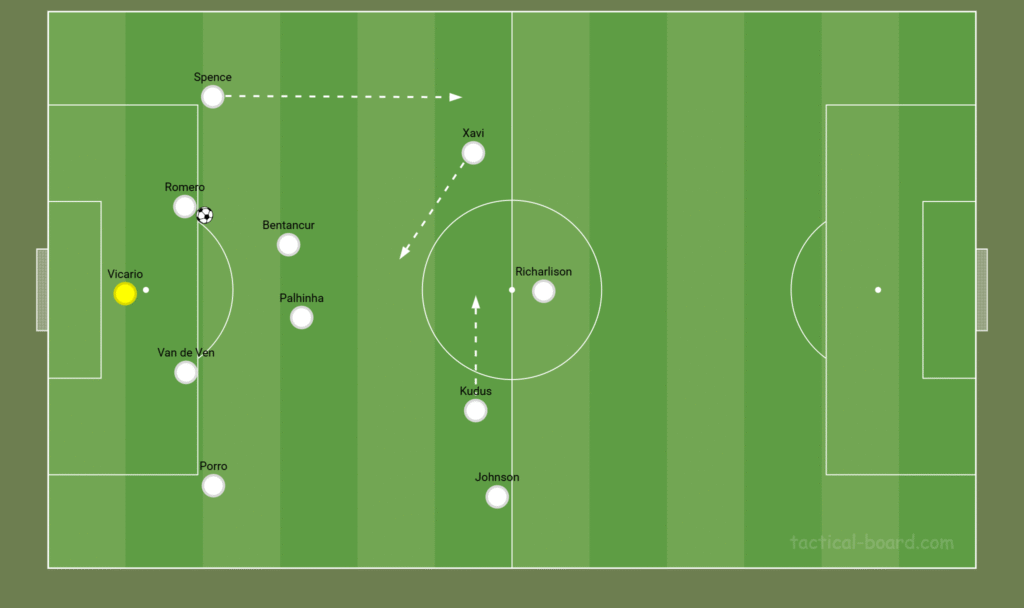
Xavi’s movement into midfield would allow him to support central build-up play by forming a triangle with Bentancur and Palhinha. This would provide a closer passing option in the middle of the pitch, improving ball progression and allowing Tottenham to move forward more cohesively. [See image below]
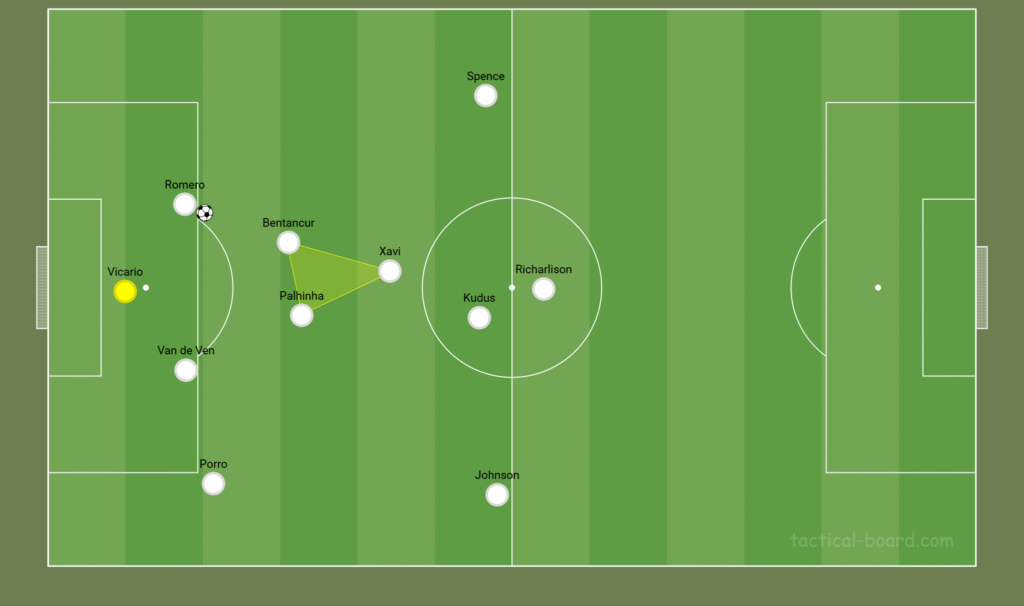
Alternatively, if Kudus is available, Tottenham can look to overload their right wing. Both Johnson and Kudus are comfortable operating in wide areas, and using them together could create a numerical advantage on that flank. Overloading United’s wide defenders would be an effective tactic, as United’s shape and defensive system often leave their outside lanes unprotected and vulnerable to wide overloads. [See images below]
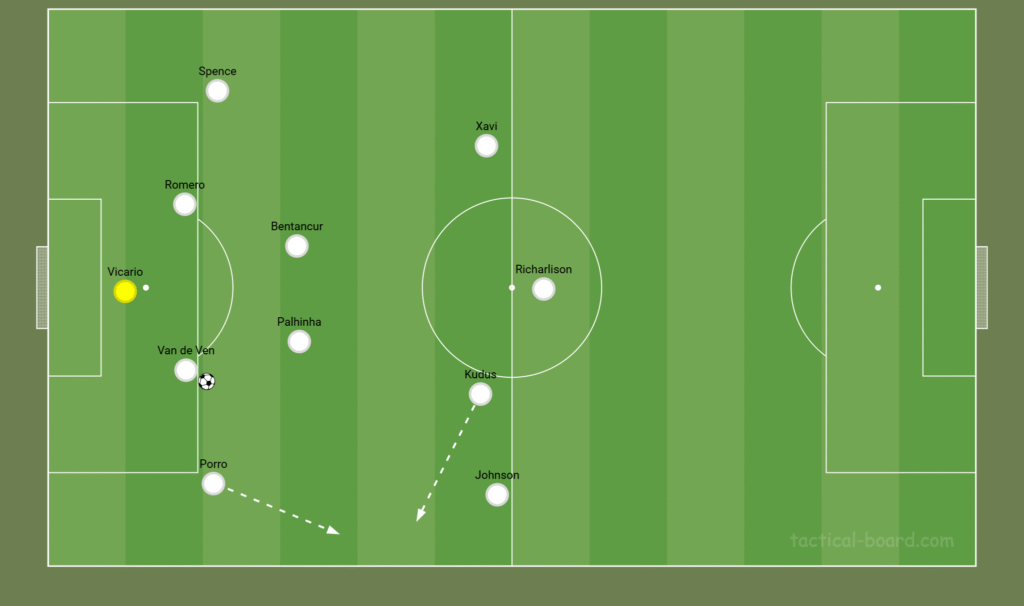
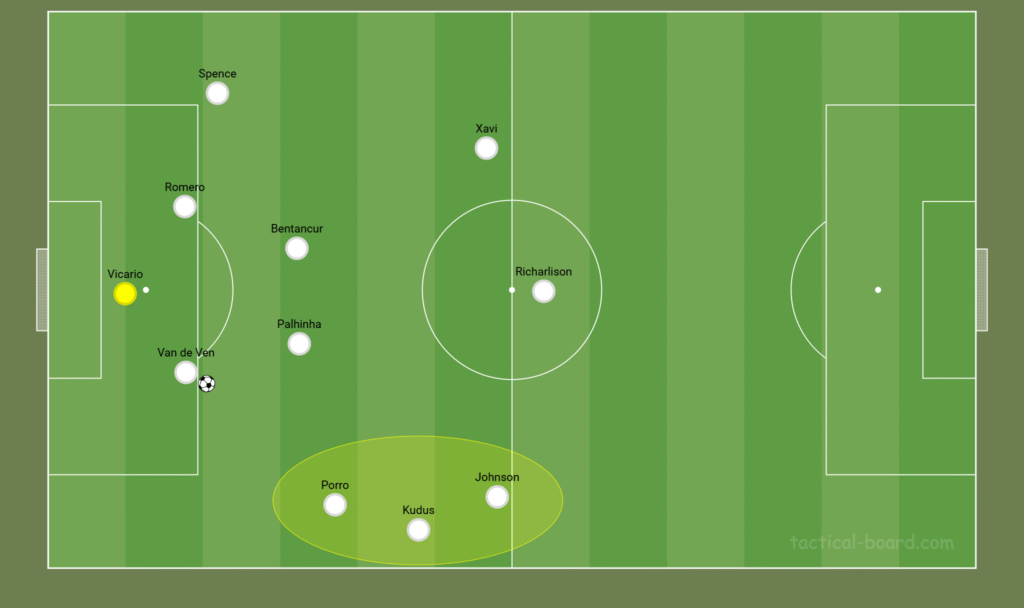
Tottenham used this same right-sided build-up pattern to good effect earlier this season, particularly against Everton. Adopting a similar approach here could help Spurs exploit United’s more centrally focused defensive setup.
Tottenham have struggled at times this season to create consistent chances and will be eager to find solutions to their build-up and attacking inefficiencies as quickly as possible.
Defensively, Tottenham line up in their 4-2-3-1 shape, which transitions into a 5-4-1 when necessary, with Bentancur or Palhinha dropping into the back line to provide extra cover. [See image below]
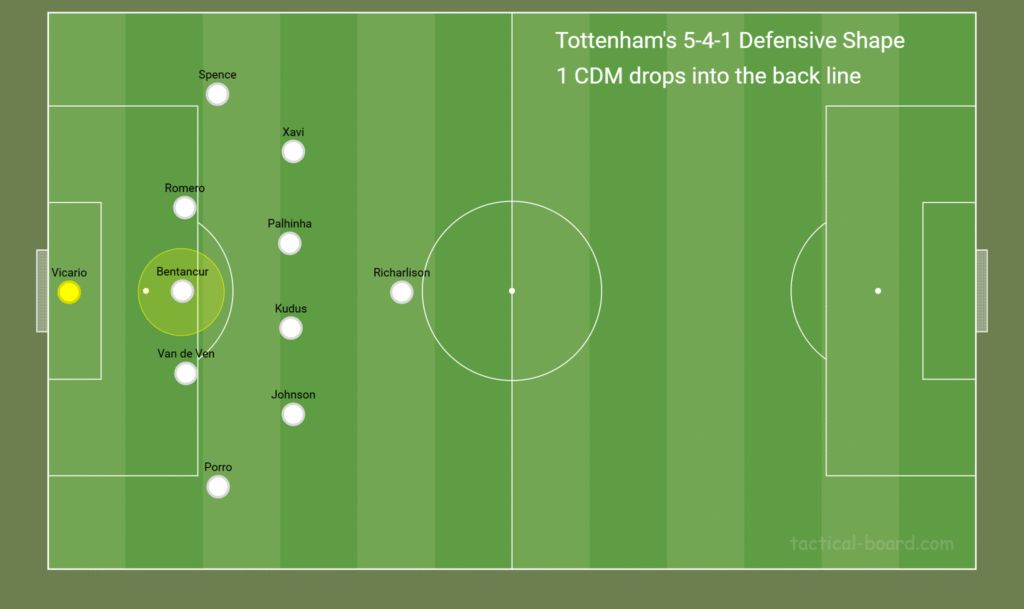
Tottenham defend extremely well and in an organized manner. Their 4-2-3-1 and 5-4-1 defensive shapes become tight and compact, making them extremely difficult to break down. Palhinha or Bentancur, or both will man-mark the opposition’s attacking midfielders, attempting to take them out of the game and limit their opponents’ attacking options. This defensive setup is narrow and compact, leaving the outside lanes open to be attacked but making central penetration extremely difficult.
Chelsea found success against Spurs by overloading those outside lanes, creating 3-v-2 and 2-v-1 situations that gave them a numerical advantage. This allowed them to progress the ball down the flanks before delivering into the area, cutting back centrally, or working the ball inward once Tottenham’s defensive shape had shifted. Manchester United will likely look to replicate Chelsea’s success by attacking the wide areas and pressing high during Tottenham’s build-up phase to cut off their central pivot options.
In attack, Spurs use a 3-2-5 shape. Djed Spence pushes high up the pitch along the left wing, allowing Xavi Simons to invert into a left-sided no. 10 role, while Kudus shifts into the right-sided no. 10 role with Johnson remaining on the right wing. The two holding midfielders provide shifting central support while the ball is on either flank, and one of them drops into the back line when a defender steps forward into open space. [See images below]
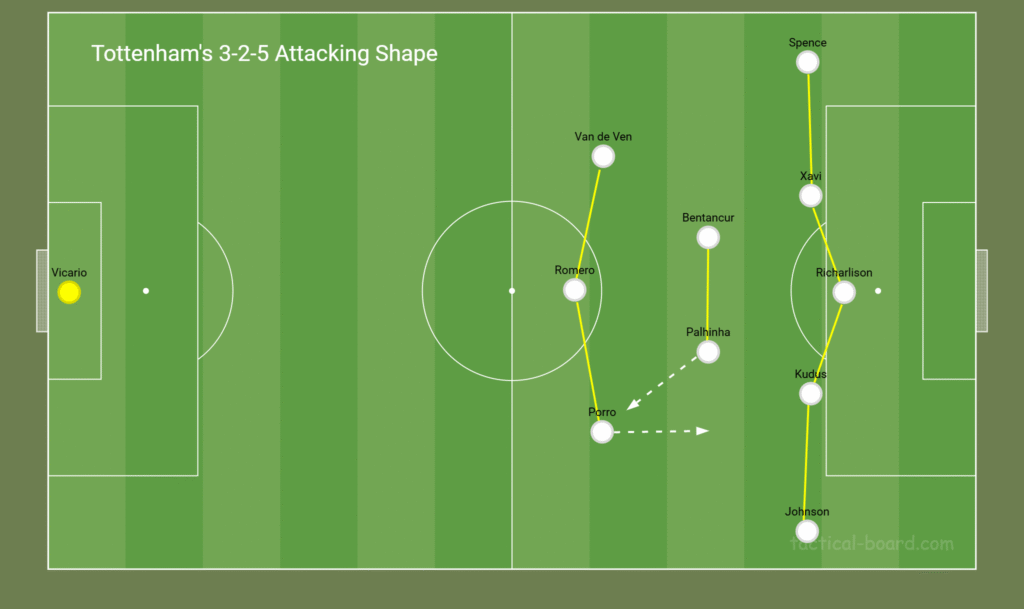
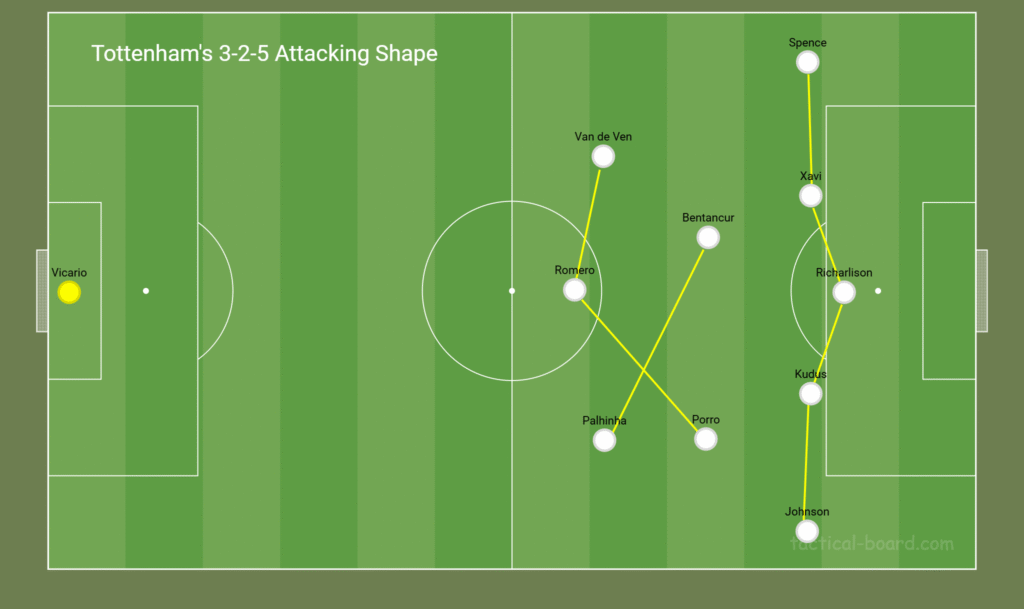
Additionally, Tottenham’s midfielders are given freedom to join the attack, creating a six-man front line or arriving late into the box unmarked. This late movement into attacking areas can be difficult for opponents to track. [See images below]
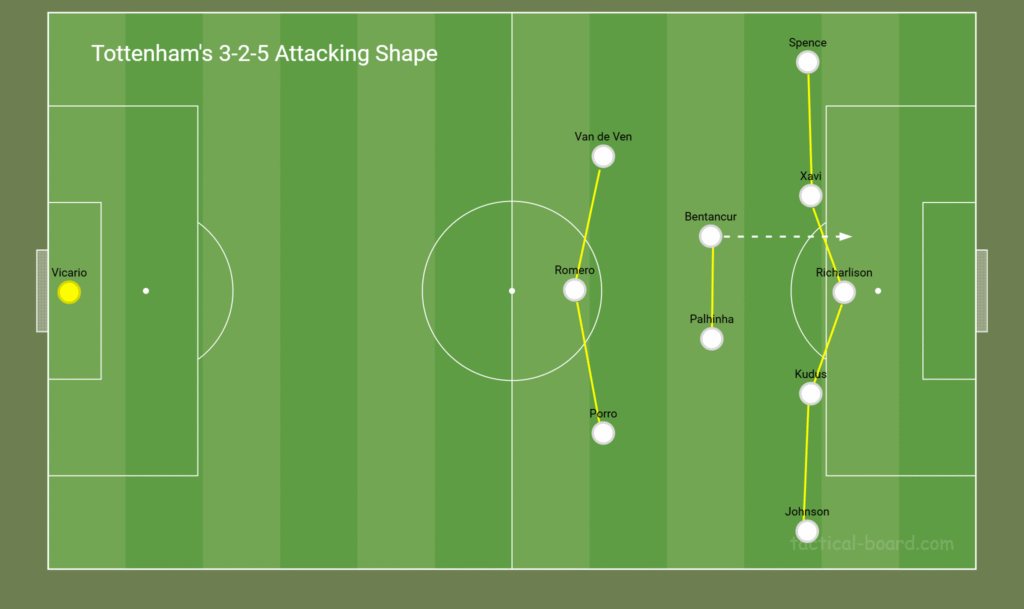
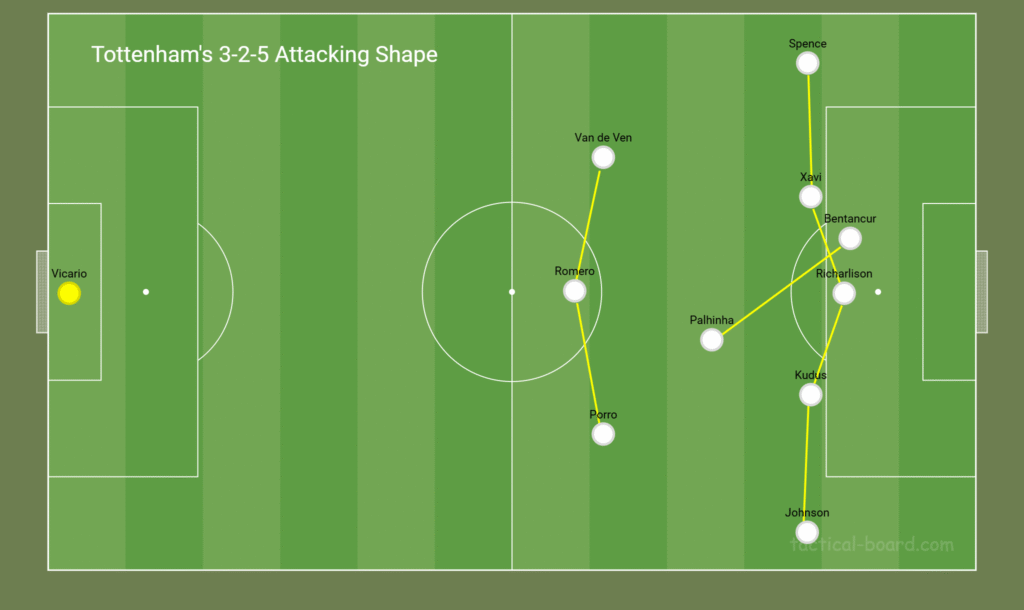
Tottenham have struggled at times to create chances, but they possess players with individual quality who can generate opportunities with Xavi Simons, Kudus, and Brennan Johnson among them.
Looking at Manchester United’s setup, they operate in a transition-heavy 3-4-3 shape. [See image below]
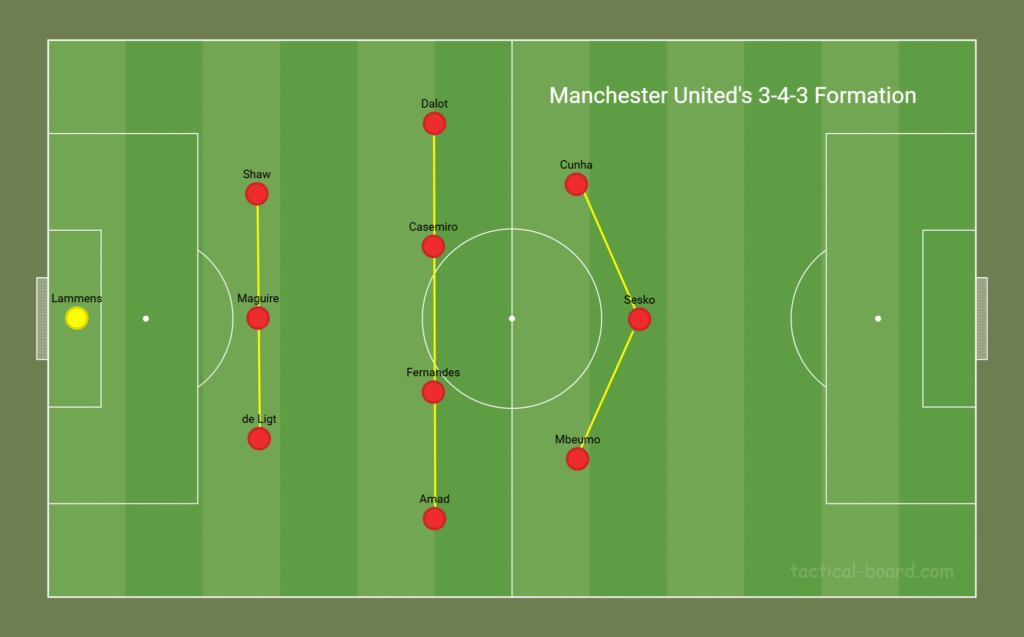
In attack, Manchester United also form a 3-2-5 shape, with their wingbacks pushing high up the pitch and Casemiro sitting slightly deeper than Bruno Fernándes to allow the Portuguese midfielder greater attacking freedom. [See image below]
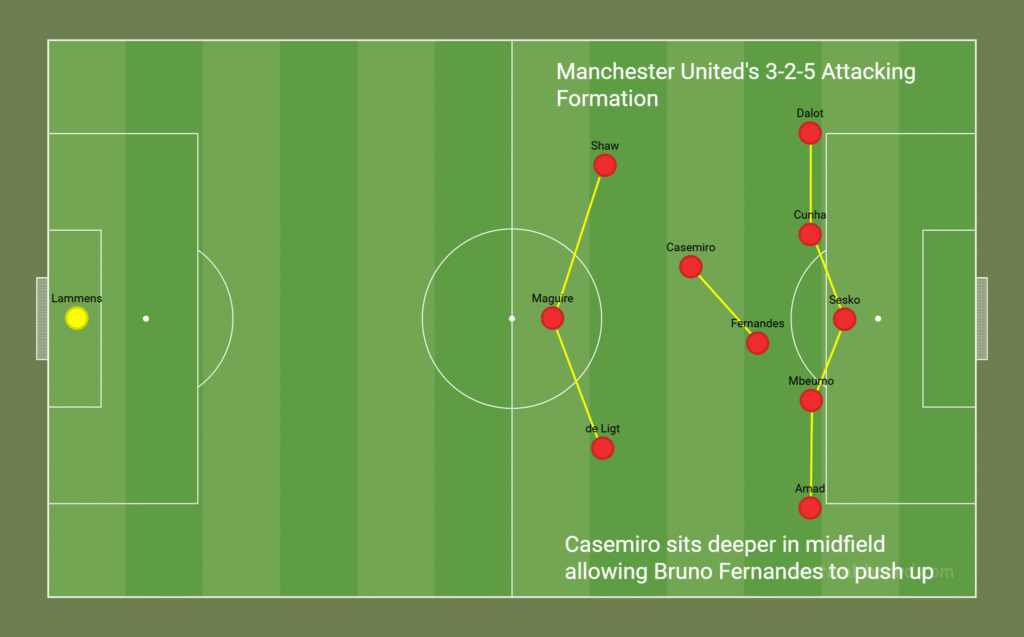
United look to stretch the field as wide as possible in possession, keeping their wingbacks on the touchlines. This width forces their opponents to shift defensively, often creating gaps that United can exploit.
With this stretched attacking structure and their midfielders’ passing range, United frequently switch play with long diagonal balls to the far-side wingback. Because of their wide positioning, United’s wingbacks often receive these passes with time and space to control the ball before creating chances. [See image below]
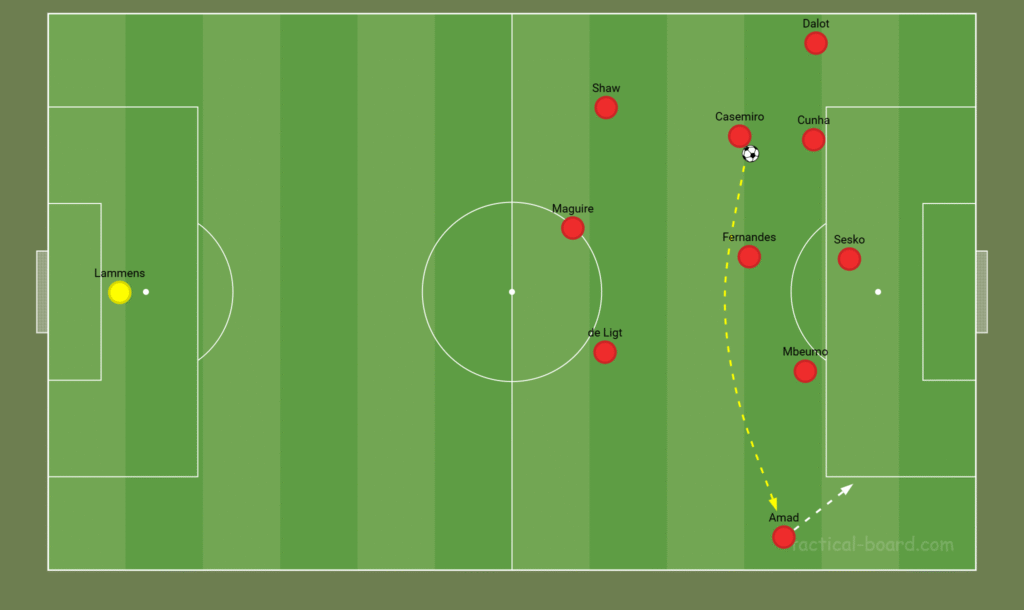
This approach has proven effective for United, generating several attacking opportunities. Against Tottenham, using these diagonal switches to attack the opposite flank could disrupt Spurs’ compact defensive shape and force them to open up gaps while shifting across.
While operating in the outside lanes, particularly through the partnership of Mbeumo and Amad Diallo, United’s wingback can advance the ball down the touchline before playing it into the half-space behind the opposing back line for one of the no. 10s to run onto. [See images below]
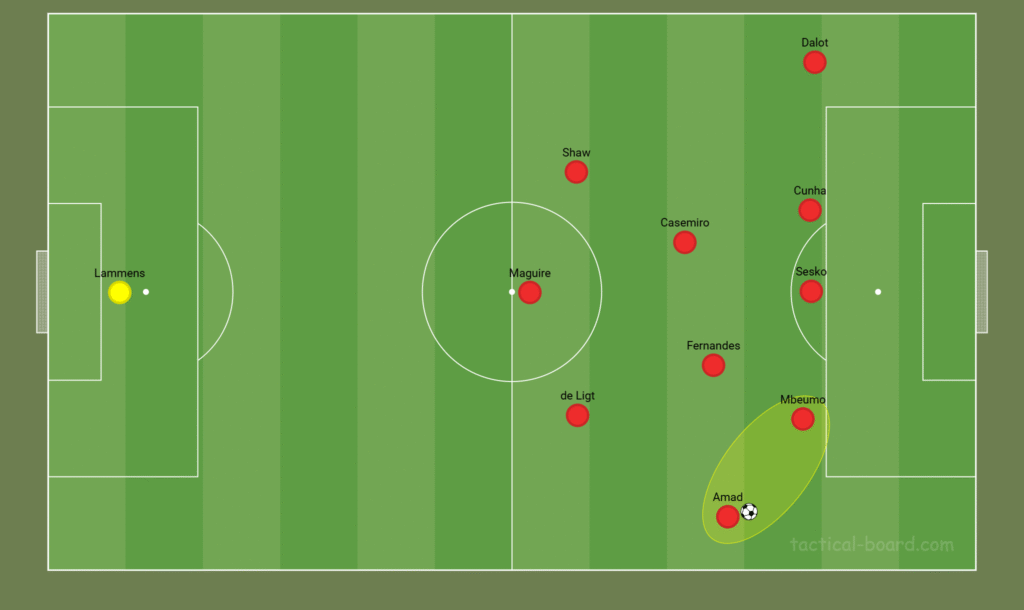
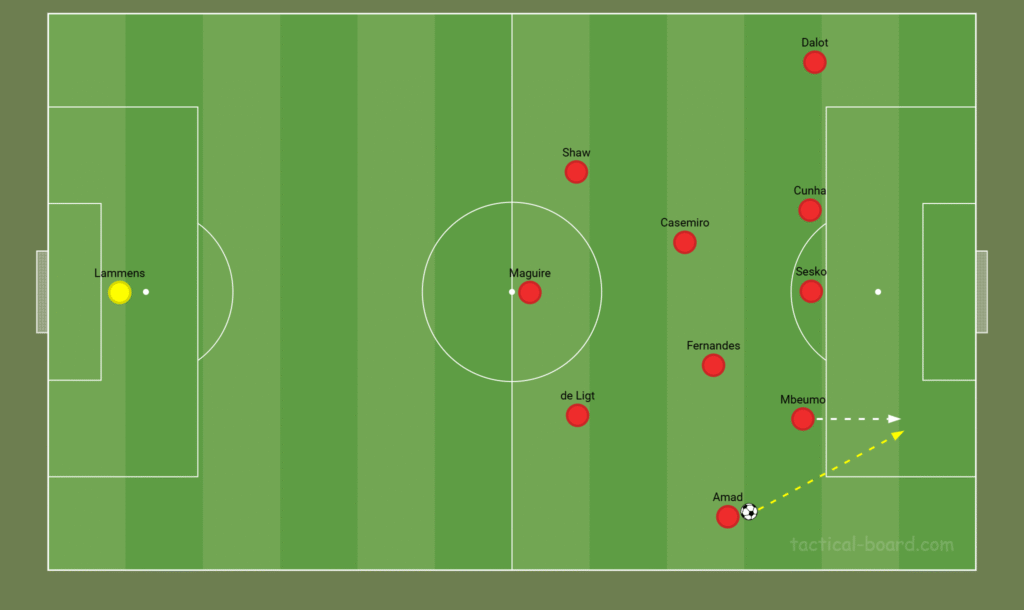
Expanding on this outside-lane-to-half-space play: the combination of Amad and Mbeumo will likely target Djed Spence, Tottenham’s left-back, who is not the most defensively sound fullback in the Premier League. United could find success through this movement, exploiting Spurs’ narrow defensive shape and attack-minded left-back.
United are well-equipped to build and progress through the outer lanes of the pitch, creating numerical overloads in an area where Tottenham have shown vulnerability.
When they lose possession in attack, United counter-press aggressively, especially when the ball is with the opponent’s back line, aiming to force long clearances they can win aerially. Tottenham could end up turning the ball back over to United multiple times through this pressure.
Defensively, Manchester United transition into a 5-4-1 shape, with their wingbacks dropping back and their attacking no. 10s (Cunha and Mbeumo) falling into the midfield line. [See image below]
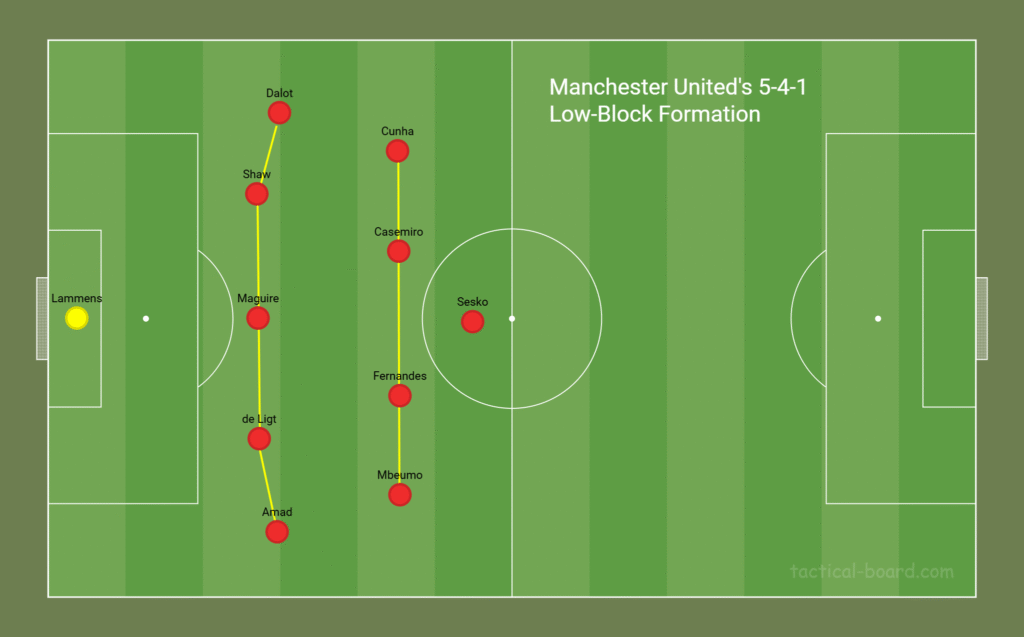
Like Tottenham, United defend narrowly and shift their entire block toward the side under attack. While this makes them compact and hard to break down, it leaves the far-side lanes open for opponents to exploit. Nottingham Forest took advantage of this exact weakness last weekend, scoring both of their goals by switching play to the opposite flank. Ironically, the same wide-play strategy that strengthens United’s attack has also been a key factor in their defensive struggles.
Manchester United have also shown vulnerability during defensive transitions, particularly when their no. 10s have not yet dropped into the midfield line. This can leave space centrally and cause Casemiro and his partner to become outnumbered. Nottingham Forest found success exploiting these moments through Callum Hudson-Odoi and Morgan Gibbs-White. [See image below]
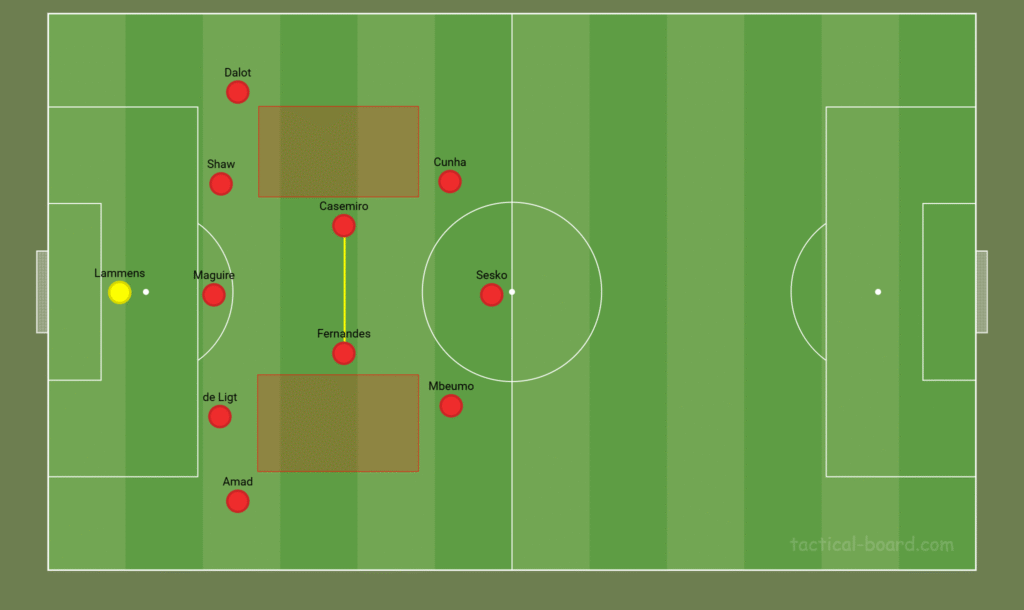
Overall, this match promises to be an exciting one that will likely be decided by how well each side manages the outside lanes of the pitch, both in attack and defense. There won’t be much separating these two teams, and both are capable of creating opportunities. Ultimately, it will come down to who can capitalize on their chances in front of goal more effectively.
Betting Tips
Pick 1: Both Teams to Score
Odds:
- American: -185
- Decimal: 1.54
- Fractional: 27/50
As stated, I believe both sides will create opportunities in this match, and with that, I also expect both teams to find the back of the net. Each side has the quality to attack effectively down the outside lanes, while neither has shown consistent defensive solidity in those same areas.
Pick: Both Teams to Score
Pick 2: Mohammed Kudus (TOT) 1+ Fouls Committed, Tackles, and Shots
Odds:
- American: -120
- Fractional: 1.83
- Fractional: 83/100
Kudus has been Tottenham’s best attacker throughout the season which sees him have a lot of involvement in each match. Kudus so far this season has averaged 1.65 fouls committed per 90 minutes, 1.24 tackles won per 90 minutes, and 1.75 shots per 90 minutes in the Premier League. In his five most recent Premier League matches, Kudus has averaged 1.80 fouls committed per 90 (1+ in 5/5), 1.80 tackles won per 90 minutes (1+ in 4/5), 1.80 shots per 90 minutes (1+ in 4/5)
I am backing Kudus to have his fingerprints all over this match. That of course depends on his injury status come Saturday and whether or not the Tottenham attacker will be able to start the match.
Pick: Mohammed Kudus (TOT) 1+ Fouls Committed, Tackles, and Shots
*Pick is voided if player does not start
Disclaimer: The betting picks and analysis shared are for informational purposes only and are not guarantees of outcome or financial advice. Please gamble responsibly and only risk money you are willing to lose.